What if the most expensive line item in your property budget isn’t the work you plan for, but the emergency repairs you’re forced to make when a surface finally fails? It’s a common frustration for property managers across Saugus, Salem, and the Greater Boston area. You’re constantly balancing tight budgets while trying to keep aging structures protected from the relentless salt air and harsh New England winter cycles. You likely already know that a fresh coat of paint does much more than just look good; it’s a vital barrier against moisture and structural decay.
By prioritizing a proactive facility maintenance painting program, you can move away from reactive “firefighting” and toward a predictable, manageable schedule. We’ll show you how to implement a strategy that protects your building materials, ensures you’re meeting strict OSHA safety standards like the 2025 PPE fit requirements, and ultimately reduces your long-term repair costs. We’ll walk through the nuances of Massachusetts VOC limits, lead paint safety for older North Shore buildings, and how to choose a partner who understands the structural integrity behind the finish.
Key Takeaways
- Learn why a proactive approach to facility maintenance painting acts as a structural insurance policy, protecting your property from moisture and the harsh Massachusetts climate.
- Discover how a scheduled program creates a predictable maintenance budget and prevents the high costs associated with emergency surface repairs.
- Understand the specific protective measures needed for coastal North Shore exteriors versus high-traffic interior spaces.
- Get a five-step framework for building a long-term maintenance calendar that ensures your facility stays safe, compliant, and professional.
- Find out why partnering with a general contractor provides a distinct advantage by addressing underlying structural issues like wood rot before the first drop of paint is applied.
Understanding Facility Maintenance Painting and Its ROI
Successful property management often comes down to one thing: staying ahead of the curve. At its core, facility maintenance painting isn’t just about making a building look presentable for a new tenant. It’s a strategic, scheduled approach to coating management that serves as your building’s primary defense against the elements. By Understanding Facility Maintenance Painting as a form of preventive care, you can transition from reactive repairs to a controlled, predictable cycle of upkeep.
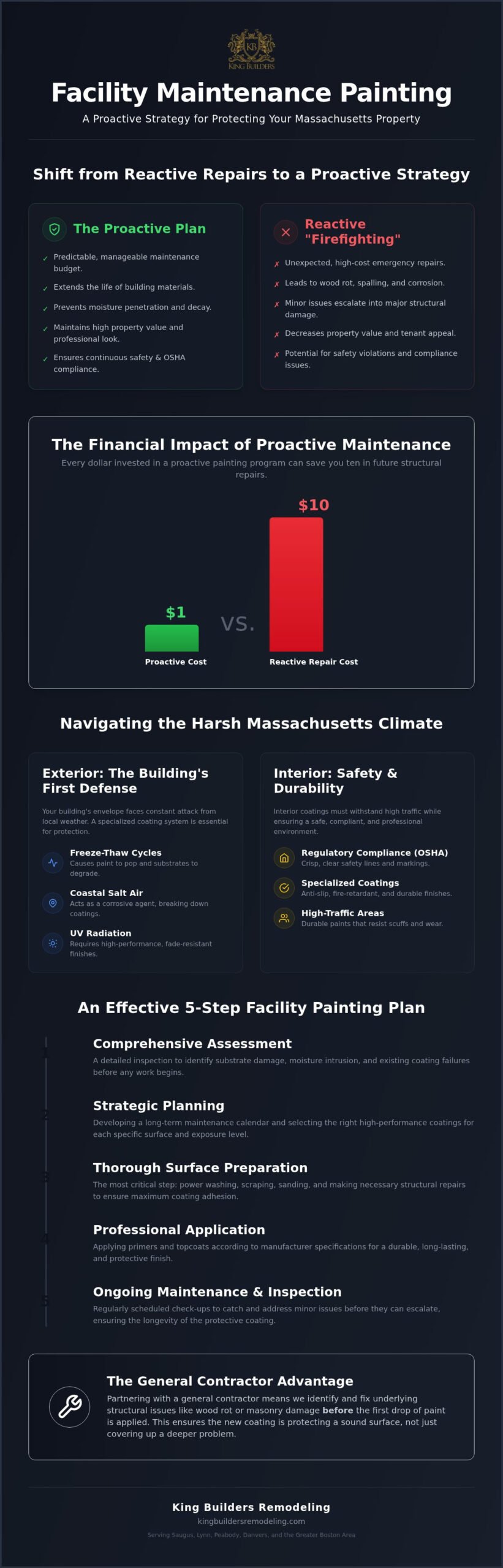
The financial logic is straightforward. Industry professionals often observe that every dollar spent on proactive facility maintenance painting can save ten dollars in future remediation. In Massachusetts, where humidity and salt air are constant factors, a failed coating doesn’t just look bad. It allows moisture to penetrate deep into the substrate, leading to wood rot, masonry spalling, or metal corrosion. You aren’t just buying paint; you’re buying years of life for your building’s exterior and interior surfaces.
Beyond the structural benefits, a clean facility signals professionalism to your customers and respect to your employees. People work better and feel safer in environments that are clearly cared for. A well-maintained property in towns like Saugus or Lynn maintains higher market value and attracts higher-quality tenants who appreciate a landlord’s commitment to excellence.
The Financial Impact of Deferred Maintenance
When you ignore a small patch of peeling paint, you’re essentially inviting a snowball effect. What starts as a cosmetic blemish quickly turns into substrate damage that requires more than just a brush. Regular inspections by a qualified Commercial Painting Contractor Pillar help you catch these minor issues before they escalate into projects requiring full-scale sandblasting or structural replacement. Since we’re general contractors, we often see how a simple paint failure in Danvers or Revere turns into a full framing repair project because moisture reached the studs.
Safety and Regulatory Compliance (OSHA)
Visual cues are vital for safety in industrial and commercial spaces. High-visibility safety yellow on stairs, bollards, and floor markings isn’t a suggestion; it’s a requirement that helps prevent workplace accidents. Specialized coatings also play a role in meeting local Massachusetts building codes. Anti-slip finishes on loading docks and fire-retardant coatings on specific surfaces help you maintain a hazard-free environment. Keeping these markings crisp and clear ensures your facility remains compliant with OSHA standards while providing a secure workspace for everyone on-site.
Interior vs. Exterior Maintenance: Navigating the Massachusetts Climate
Managing a property in the Greater Boston area requires more than just a standard checklist. Our local weather is notoriously unpredictable, swinging from humid, salt-heavy summers to punishing winters with relentless freeze-thaw cycles. This volatility dictates how we approach facility maintenance painting. In coastal communities like Lynn and Revere, the airborne salt acts as a corrosive agent, breaking down standard residential-grade paints in a fraction of their expected lifespan. A professional approach means selecting coatings based on the specific substrate, whether you’re protecting historical brick in Salem or modern EIFS in Saugus.
Exterior Painting: The Building Envelope
The exterior of your building is its first line of defense. In Massachusetts, the biggest threat is often the moisture that gets trapped during a winter freeze. When water enters small cracks in masonry or wood siding and then freezes, it expands, causing the paint to pop and the substrate to degrade. High-performance coatings are essential here, as they provide the necessary UV resistance and breathability to handle these shifts. We focus heavily on common failure points like window sills, joints, and aged caulking. Following the standards set by the Painting Contractors Association, we ensure that every square inch of the building envelope is sealed and resilient. If you’re noticing early signs of wear on your facade, it’s often best to request a professional assessment before the next season hits.
Interior Painting: High-Traffic and Specialty Zones
While the exterior fights the weather, the interior fights daily wear and tear. Lobbies, hallways, and stairwells in busy commercial buildings require durable, scrubbable finishes that can withstand constant contact. For larger facilities, we often utilize specialty coatings like dryfall for high ceilings, which allows for efficient coverage without the mess of traditional overspray. Epoxy coatings are another staple for utility rooms and high-traffic floors, providing a surface that is both chemical-resistant and easy to clean. Because many of our projects take place in occupied retail environments, we prioritize low-VOC paints. These products minimize odors and ensure that facility maintenance painting doesn’t disrupt the comfort of your employees or customers. By matching the right product to the specific zone, we extend the life of your interior finishes and maintain a professional atmosphere year-round.
One-Time Painting Projects vs. Scheduled Maintenance Programs
Property managers in the Greater Boston area often find themselves stuck in a cycle of reactive repairs. You wait until the paint is visibly failing, then scramble to find a contractor for a massive, one-time overhaul. This reactive model might feel like it’s saving money in the short term, but it actually creates a spiked cost curve that’s difficult to budget for. In contrast, a strategic facility maintenance painting program flattens that curve. By scheduling smaller, consistent touch-ups, you ensure the property stays in peak condition without the shock of a six-figure invoice every decade.
Why One-Time Projects Often Cost More
One-time projects carry heavy re-mobilization costs. Every time a crew starts from scratch, you’re paying for the logistics of site setup, equipment delivery, and labor ramp-up. Even more significant is the cost of neglected surfaces. If a building in Peabody or Danvers has gone seven years without attention, the preparation phase becomes a massive undertaking. Instead of a simple cleaning and topcoat, your bill now includes hours of aggressive scraping, sanding, and chemical stripping to address the damage. Deferred maintenance liability is the accumulated cost of necessary repairs that a property owner has postponed, which inevitably results in higher eventual expenses and structural risks. Before a major repainting project begins, many facility managers also find it beneficial to schedule commercial junk removal in Saugus MA to clear out old inventory, furniture, and debris so crews can access every surface without obstruction.
To bridge the gap between major projects, we utilize a “Painter for a Day” concept. This service is designed for small-scale touch-ups and repairs that don’t justify a full crew mobilization. Whether it’s scuffs in a high-traffic lobby or minor damage from a furniture move, having a professional available for quick repairs keeps your facility looking sharp. This model also grants you on-call priority. During seasonal transitions or before a high-stakes tenant walkthrough, you won’t have to wait weeks for a slot in a busy contractor’s schedule.
The Benefits of a Multi-Year Agreement
A multi-year agreement transforms your contractor into a partner who understands your building’s specific quirks. Because we are general contractors, we don’t just look at the surface; we recognize when a recurring paint failure on a Melrose storefront is actually a sign of a structural shift or a hidden leak. Regular inspections allow us to perform spot-priming on vulnerable areas, which prevents the need for a full repaint of the entire facade. We also provide flexible scheduling, including nights and weekends, to ensure facility maintenance painting happens when your business is quiet, minimizing disruption to your daily operations. This long-term relationship ensures that the person working on your walls cares about the building’s health as much as you do.
How to Build an Effective Facility Painting Plan in 5 Steps
Creating a structured facility maintenance painting calendar is the most effective way to protect your property investment. Instead of waiting for a tenant to complain or a surface to fail, you can take control of your building’s health through a systematic approach. We recommend collaborating closely with a general contractor who understands the structural implications of surface wear. This partnership ensures that your plan addresses both cosmetic needs and the underlying integrity of the building. Plans shouldn’t be static; review them annually to account for the previous winter’s weather damage or changes in how your tenants use the space.
Step 1: The Comprehensive Building Audit
Begin with a meticulous walk-through of the entire property, from the coastal-facing facades in Lynn to the high-traffic loading docks in Saugus. Your goal is to identify early signs of peeling, fading, or moisture intrusion before they escalate. Categorize every surface by its “criticality.” The exterior shell and structural steel are high-priority zones because their failure leads to expensive remediation, while back-of-house storage areas might fall into a lower tier. Maintaining a digital photo archive provides an objective audit trail that justifies budget requests and tracks the rate of surface degradation over time.
Step 2: Prioritization and Budgeting
Once your audit is complete, determine which areas require immediate intervention and which can safely wait 12 to 24 months. Allocate your funds based on the “cost of failure.” For example, addressing rusting steel beams is a non-negotiable priority compared to refreshing scuffed drywall in a secondary hallway. Always include a contingency fund in your budget. It’s common to discover hidden issues, like wood rot or masonry cracks, once the actual painting process begins, and having these funds ready prevents project delays.
Steps 3-5: Specification, Scheduling, and Review
Step 3 involves selecting the right coatings for the specific environment. A warehouse floor in Peabody requires different chemical resistance than a retail storefront in Melrose. In Step 4, we develop a non-disruptive work schedule. This often means working overnight or during weekend windows to ensure the project doesn’t interfere with your tenants’ business hours. Finally, Step 5 is the post-project review. Sit down with your team after the work is finished to document what was learned and adjust next year’s maintenance plan accordingly. This cycle of continuous improvement keeps your facility in peak condition year-round.
Selecting a Strategic Painting Partner in Greater Boston
Choosing a partner for your facility maintenance painting program is one of the most critical decisions you’ll make for your property’s long-term health. Many “bucket-and-brush” operations can apply a coat of paint, but they often fail to look beneath the surface. A professional contractor brings a different level of accountability. They understand that a fresh finish is only as good as the substrate it covers. If you’re managing assets in the North Shore, you need a partner who views painting as a structural necessity, not just a cosmetic upgrade.
The General Contractor Advantage
One of the primary risks of hiring a painting-only company is that they might unintentionally hide serious structural problems. When we encounter wood rot, framing damage, or moisture intrusion during a project, we don’t just paint over it. As a full-service general contractor, we have the expertise to pause and fix the underlying issue. This “one-stop” approach is invaluable for property managers. Whether you need framing repairs, floor installs, or even a full kitchen or bathroom update during a facility refresh, having one team handle everything ensures a seamless workflow. It eliminates the need to coordinate multiple vendors and keeps your project on schedule.
Vetting for Local Expertise
Local knowledge is non-negotiable in the Greater Boston construction landscape. Every municipality, from Saugus to Boston, has its own nuances regarding permit requirements and building codes. You should always confirm specific requirements with your local building department, as they can vary by project type. When vetting a potential partner, ask about their experience with Massachusetts-specific regulations and their physical presence in the area. A contractor with deep roots in the community and verifiable references in the North Shore is more likely to stand by their work long after the project is complete.
Before signing a contract, ask these key questions to ensure your partner is the right fit:
- Can you provide a Certificate of Insurance (COI) that meets our facility’s specific liability requirements?
- How do you handle structural issues like wood rot or masonry decay if they’re discovered mid-project?
- What is your plan for ensuring OSHA compliance, specifically regarding the 2025 PPE fit rules for your crew?
- Do you have experience working with low-VOC coatings in occupied commercial spaces?
King Builders Remodeling has been a reliable pillar of the local industry in Saugus and the North Shore for over 10 years. We are a family-owned and operated team that treats every property with the same care we’d give our own homes. We pride ourselves on being the principled experts you can trust for reliable facility maintenance painting and comprehensive commercial remodeling contractor Massachusetts services.
Protecting Your Property for the Long Term
Transitioning from reactive repairs to a scheduled program is the most effective way to stabilize your budget and safeguard your building’s integrity. By choosing coatings that withstand the North Shore’s unique climate and following a methodical audit process, you ensure your property remains a professional and safe environment for every tenant. This proactive approach turns an unpredictable expense into a manageable asset protection strategy.
A fresh coat of paint is only as strong as the surface beneath it. As a family-owned general contractor with over 10 years of experience in Saugus and the surrounding communities, we specialize in identifying structural issues like wood rot that others might overlook. We understand Massachusetts building codes and the importance of ethical, high-quality craftsmanship. We’re ready to help you implement a facility maintenance painting plan that serves your property for years to come. If you’re also planning a larger renovation alongside your maintenance program, our buyer’s guide to commercial remodeling contractor Massachusetts projects in 2026 can help you navigate permits, zoning updates, and contractor selection.
Your property is a significant investment; we’re here to help you protect it with confidence and neighborly care.
Frequently Asked Questions
How often should a commercial building be repainted for maintenance?
Most commercial buildings need interior touch-ups every 3 to 5 years, while exteriors generally last 5 to 7 years. In coastal North Shore towns like Lynn or Revere, the salt air can accelerate wear on exterior coatings. A scheduled facility maintenance painting program helps you identify specific zones that need more frequent attention. This proactive approach ensures your property stays protected without requiring a full, expensive repaint every time a single wall shows wear.
What is the best time of year for exterior facility painting in Massachusetts?
The best window for exterior work in Massachusetts is between May and October. You want to avoid the high humidity of mid-summer and the freezing temperatures of a typical New England winter. Consistent temperatures between 50 and 85 degrees Fahrenheit allow the paint to cure properly. For managers in Saugus or Peabody, scheduling these projects in the early autumn often provides the most stable weather conditions for long-lasting results.
Can facility painting be done during normal business hours?
We can certainly perform painting during business hours, though many managers prefer nights or weekends to minimize disruption. If we work while your facility is occupied, we use low-VOC, low-odor paints to ensure employee comfort and safety. We’ll carefully cordon off work zones to maintain a clean environment. Whether you’re in a retail space in Malden or an office in Everett, we’ll coordinate a timeline that keeps your operations running smoothly.
What is dryfall paint, and when should it be used in a facility?
Dryfall paint is a specialty coating designed for high ceilings and structural steel in large facilities. When sprayed, the overspray dries into a non-adherent powder before it reaches the floor, which makes cleanup much easier. It’s an excellent choice for warehouses in Danvers or open-ceiling commercial spaces in Lynnfield. This product allows for efficient coverage of large areas while protecting the equipment or inventory located on the ground level below.
Does facility maintenance painting include minor repairs like drywall or wood rot?
Yes, because King Builders is a full-service general contractor, our facility maintenance painting services often include addressing wood rot, drywall damage, and minor framing issues. Most painting companies just cover up these problems, but we believe in fixing the root cause first. If we find structural decay during our audit, we can handle the repairs immediately. This ensures the new coating adheres properly and your building remains structurally sound for years.
What are the most common signs that my facility needs immediate painting maintenance?
Look for chalking, which is a powdery residue on the surface, or visible peeling and flaking. These signs indicate that the protective bond has failed. You should also watch for small moisture bubbles or rust streaks on metal components. In coastal areas like East Boston or Revere, metal corrosion happens quickly once the paint is compromised. Catching these issues early prevents moisture from reaching the substrate and causing expensive structural damage.
How much does a commercial painting maintenance program typically cost?
The cost of a maintenance program depends on several factors, including the square footage of your facility and the level of surface preparation required. While we don’t provide flat rates, a proactive program is generally more cost-effective than one-time emergency projects. By spreading the work over several years, you create a more predictable budget. We provide detailed bids that outline the specific products and labor needed for your North Shore property’s unique requirements.
Do I need a permit for commercial painting in towns like Saugus or Peabody?
Most cosmetic painting projects don’t require a permit, but requirements can vary significantly between municipalities like Saugus and Peabody. If your project involves structural repairs, major scaffolding, or changes to a historical facade, you might need specific approvals. We always recommend confirming the current requirements with your local building department before starting. As local experts, we can help you understand which aspects of your facility refresh might trigger a need for official documentation.