

What if the lowest remodeling bid isn’t the best fit for your home? When proposals cover different work or make different assumptions, comparing totals alone can leave important questions unanswered. These practical tips for hiring a remodeling contractor can help you look beyond the bottom line and assess what each contractor plans to do, how they’ll communicate, and what to clarify before work begins.
For homeowners across the North Shore and Greater Boston, a kitchen remodel, bathroom update, basement project, or home addition can each bring different decisions and disruptions. Permit and municipal requirements can vary by project and location, so confirm what applies with your local building department. This guide explains how to compare proposals using consistent, project-relevant criteria, discuss communication and changes, and plan a clear next step. King Builders Remodeling is a family-owned Massachusetts remodeling company serving homeowners in Saugus, Andover, Peabody, Lynn, Lynnfield, Malden, and Revere.
Key Takeaways
- Start with your priorities and project boundaries so you can judge whether a contractor’s experience fits the work you have in mind.
- Use these hiring a remodeling contractor tips to compare relevant project examples and learn how contractors communicate when plans need attention.
- Review each proposal against the same written brief, then clarify assumptions and how changes will be handled before agreeing to the work.
- Check project-specific requirements with your local building department, and consider King Builders Remodeling, a family-owned company established over 10 years ago, for your next step.
Hiring a Remodeling Contractor Starts with Defining the Project
Choosing a contractor can feel difficult when your plans are still taking shape. You may know a room needs to work better without having settled on every finish or layout detail. You don’t need every decision made before an initial conversation, but identifying your priorities helps you focus on contractors whose experience and approach suit the work.
A headline estimate or broad reputation can’t tell you whether a contractor is a good fit for your specific project. A kitchen remodel may involve cabinets, countertops, flooring, and changes to how the room functions. A bathroom renovation has different needs, while a basement remodel or home addition can involve a wider range of construction considerations. The role of a general contractor can include coordinating different parts of a construction project, but the right fit still depends on the work your home needs.
Turn your renovation ideas into a clear project brief
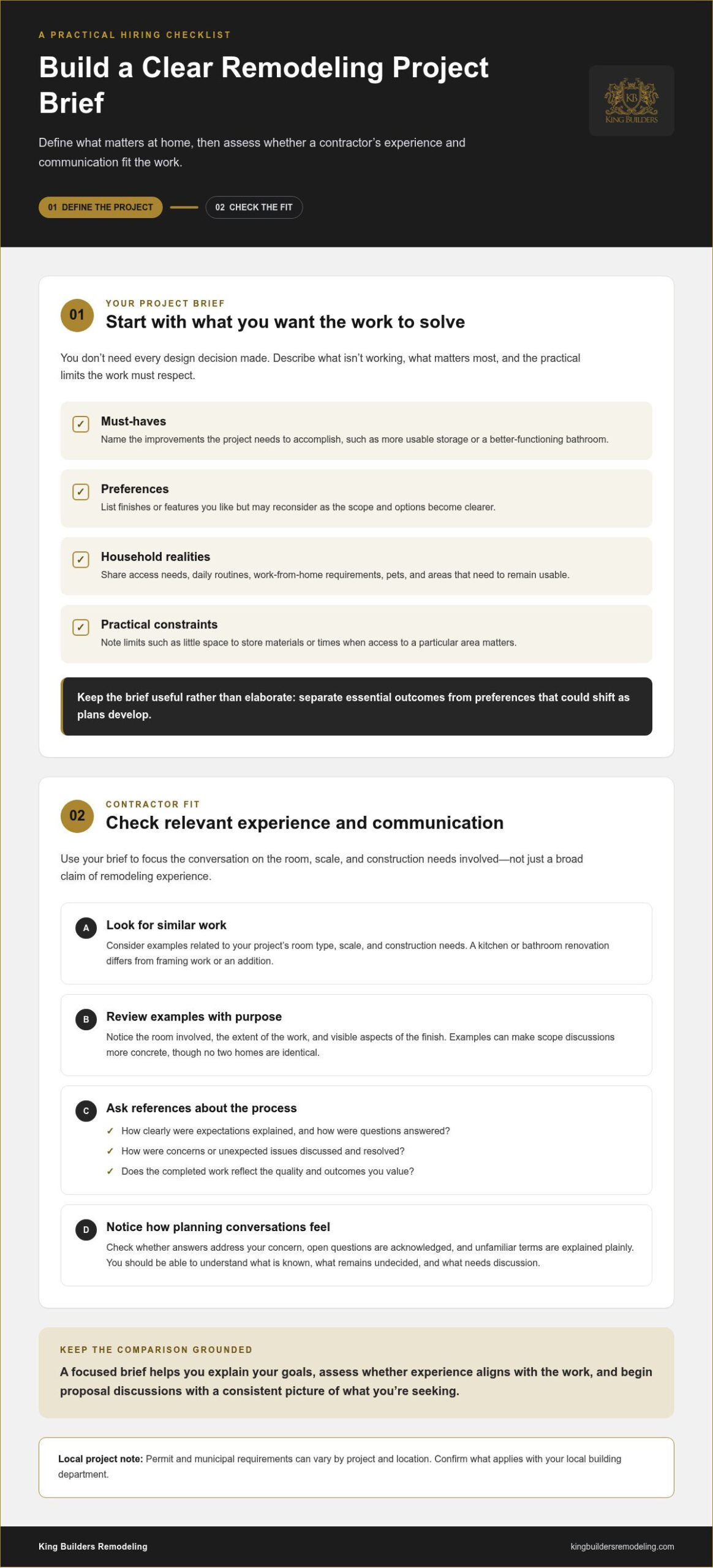
A project brief is a shared starting point that describes what you want to change, what matters most, and what practical limits the work must respect. Keep it useful rather than elaborate. List the rooms and conditions you want addressed, then separate essential outcomes from preferences that could shift as plans develop.
- Must-haves: Identify the improvements the project needs to accomplish, such as more usable storage or a better-functioning bathroom.
- Preferences: Note finishes or features you like but may reconsider as the scope and options become clearer.
- Household realities: Describe access needs, daily routines, work-from-home requirements, pets, and areas that need to remain usable.
Also note practical constraints, such as limited space for storing materials or times when access to a particular area matters. These details make the first discussion more grounded and can bring trade-offs to light early. You don’t need to solve every design question yourself. Start with what isn’t working and what a successful result would let you do.
Match contractor experience to the work involved
Look for experience relevant to the work in your brief, not just a general claim of remodeling expertise. A project’s room type, scale, and construction needs matter: kitchen and bathroom renovations differ from framing work or an addition. Examples of similar work can make a conversation about scope more concrete, even though no two homes are identical.
If your plans include a kitchen, the kitchen remodeling guide can help you consider the room’s needs and the work involved. Bring questions about your priorities, such as how the kitchen is used and what you hope to improve. This gives both sides a clearer basis for discussing the project instead of relying on broad assumptions.
Good hiring a remodeling contractor tips start with clarity, not a perfect set of plans. A focused brief helps you explain your goals, understand whether experience aligns with the work, and move into proposal discussions with a consistent picture of what you’re seeking.
How to Evaluate a Remodeling Contractor’s Experience and Communication
Past projects and references can offer a clearer picture of a contractor’s working style than a polished portfolio alone. Look for examples related to the work you’re considering, while remembering that homes, conditions, and homeowner priorities differ. A finished room can show workmanship; a conversation about the project can reveal how expectations were managed along the way.
Relevant experience means experience with the type and scope of work proposed. Broad remodeling experience is useful, but the room, scale, and construction needs still matter. Consider the evidence as a whole rather than treating one photo or recommendation as a guarantee of how your project will go.
Review project examples and references with purpose
Compare examples for details that matter to your project: the room involved, the extent of the work, and visible aspects of the finish. Ask references about communication and problem-solving, not only whether they liked the final result. Their home and project may differ from yours, so focus on what their experience can tell you about the contractor’s approach.
- Ask how clearly expectations were explained and how questions were answered.
- Find out how concerns or unexpected issues were discussed and resolved.
- Consider whether the completed work reflects the quality and outcomes you value.
Listen for specific descriptions rather than relying on a simple yes-or-no endorsement. A reference who can explain how a question was handled offers more useful insight into the working relationship.
Assess communication before work begins
Planning conversations offer an early view of how a contractor listens and explains. Notice whether answers address your actual concern, whether open questions are acknowledged, and whether unfamiliar terms are explained plainly. Clear communication doesn’t mean every detail is settled immediately; it means you can understand what’s known, what remains undecided, and what needs discussion.
If your project involves a bathroom, the bathroom remodeling guide can help you consider the room’s goals and practical needs. Bring your priorities into the discussion, then notice whether the conversation helps clarify the work rather than leaving you with more uncertainty.
Useful tips for hiring a remodeling contractor include reviewing relevant work, speaking with references, and noticing how clearly your questions are answered. For general consumer-protection information in Massachusetts, consult the Massachusetts Office of Consumer Affairs and Business Regulation. You can also share your project details with King Builders Remodeling.
Compare Remodeling Proposals by Scope, Assumptions, and Changes
Once you have proposals, resist ranking them by the total alone. A lower figure doesn’t show whether the same tasks, materials, or project responsibilities are included. Comparable proposals require comparable scopes, not just comparable totals. Use the written project brief from your planning conversations as a shared reference, then identify what each proposal says will be done and what still needs clarification.
A simple comparison chart can make differences easier to see. Give each proposal its own column and track the same categories across the page. Mark an item “not stated” when the document doesn’t address it, rather than assuming it’s included or excluded. That distinction gives you a focused list of questions before you decide.
Build an apples-to-apples proposal comparison
Review each document for the rooms, tasks, materials, and finish assumptions it describes. A kitchen proposal, for example, may list cabinet and countertop work but leave flooring or related repairs unclear. The point isn’t to expect identical wording; it’s to spot differences that could affect the completed project and ask for a clear description of the scope.
- Scope: Which rooms and specific tasks are included?
- Materials and finishes: What selections or quality assumptions does the proposal describe?
- Exclusions: What work or materials are expressly left out?
- Assumptions and open questions: Does the proposal depend on a condition, selection, or decision that hasn’t been settled?
Keep stated details separate from assumptions. If a proposal refers to a finish you haven’t selected, or leaves a possible repair unaddressed, note it for discussion. For work that may involve building-code considerations, the Massachusetts State Building Code is an official reference. Requirements depend on the project and municipality, so confirm applicable requirements with the local building department when appropriate.
Clarify written terms and potential scope changes
Before agreeing, read the written terms alongside the scope. Make sure you understand the described work, payment terms, and each party’s stated responsibilities. If wording is unclear, ask for an explanation or written clarification rather than relying on a verbal impression. This keeps your decision grounded in the agreement you’re reviewing, not an assumption about what a standard contract should contain.
Remodeling can reveal conditions or prompt choices that weren’t resolved at the outset. Ask how a proposed change will be described, how its effect on the work will be explained, and how approval will be recorded before the changed work proceeds. Clear documentation gives everyone a common reference and helps you consider the decision before it becomes part of the project.
These hiring a remodeling contractor tips can turn a stack of estimates into a practical comparison. Look for a proposal that clearly reflects the work you want, names important assumptions, and gives you a written process for resolving open questions and changes.
Plan for Permits, Inspections, and Remodeling Disruption in Massachusetts
As the project scope takes shape, consider the practical steps that affect when and how work can move forward. Permit, inspection, zoning, and code considerations depend on the project and municipality. A remodel in Saugus may raise different local questions than similar work in Lynn or Peabody, so don’t assume one town’s process applies everywhere.
Confirm local requirements without assuming one rule fits every town
For project-specific guidance, contact the building department in the municipality where the property is located. Describe the planned work and ask which local requirements may apply, including whether permits or inspections are relevant. If zoning questions may affect the project, ask which town office handles them. Confirm requirements before work begins rather than relying on a neighbor’s experience or assumptions based on a similar renovation.
Keep the information you receive with your project notes, and clarify how applicable requirements will be addressed in the project plan. Requirements can vary with both the work and its location. This matters for homeowners throughout the North Shore and Greater Boston, including Saugus, Andover, Peabody, Lynn, Lynnfield, Malden, and Revere, where local processes aren’t necessarily identical.
Prepare your household for the remodeling process
Remodeling also changes how you use your home. Talk through practical details before work starts so the plan accounts for your household’s routines and access needs. A kitchen project, for example, can affect where meals are prepared, while work near an entrance may change how people move through the home.
Bring questions like these into the planning conversation:
- Access: Which entrances or rooms may need to remain clear, and how will you coordinate access to the work area?
- Parking and deliveries: Where could workers or materials arrive without creating avoidable access issues?
- Noise and room use: Which household routines or quiet periods should be discussed before work is underway?
- Selections and decisions: How will you review material choices, communicate decisions, and understand when an answer is needed?
Agree on a practical way to share questions and updates, and clarify who you should speak with about a decision or a change in household needs. Discuss material selections early enough to understand which choices remain open and how they fit the project plan. Clear expectations can help you prepare, even though renovation details may evolve as work progresses.
These hiring a remodeling contractor tips extend beyond choosing a proposal. They help you prepare for local requirements and daily life during construction, while keeping project questions visible and easier to address. You can discuss your remodeling scope with King Builders Remodeling.
Choose a Local Remodeling Partner and Take the Next Step
A sound choice comes from looking at the whole working relationship, not one impressive project photo or a single proposal total. Consider whether the contractor’s experience fits your project, communication feels clear, the written scope matches your priorities, and expectations are documented. These hiring a remodeling contractor tips can help you make a measured decision and choose a partner whose approach feels right for your home.
King Builders Remodeling is a family-owned Massachusetts company established over 10 years ago. Its residential remodeling work includes kitchens, bathrooms, basements, and home additions. Each brings different goals and construction considerations, so a useful conversation starts with the rooms, needs, and conditions specific to your property, not assumptions based on another homeowner’s project.
Use a final decision checklist before agreeing to work
Before you move forward, take a final pass through the written description and your planning notes. The goal isn’t to remove every uncertainty from a remodeling project; it’s to bring important questions into the open and make sure the agreement reflects the work you discussed.
- Project fit: Does the proposed work align with the rooms, goals, and practical needs you described?
- Written scope: Are the work, selections, assumptions, and exclusions clear enough for you to understand what’s included?
- Communication: Do you know how questions and decisions will be discussed as the project progresses?
- Changes: Is there a clear written way to document and approve changes before proceeding?
- Local considerations: Have you addressed applicable project requirements with the relevant local building department?
If a detail still feels uncertain, pause and ask for clarification in writing. That gives you a shared point of reference and helps prevent different expectations from carrying into the work.
Start a conversation about your Massachusetts remodeling project
King Builders Remodeling serves Saugus and nearby North Shore and Greater Boston communities, including Andover, Peabody, Lynn, Lynnfield, Malden, and Revere. Homes and project needs vary from town to town and property to property, so sharing the specifics matters. Describe the rooms you’re considering, what you hope to improve, and any concerns that will shape the work. A clear starting point makes the first conversation more useful.
You don’t need every selection finalized to explain what you’re hoping to accomplish. Start with your priorities and the questions you’d like to resolve, then take the next step at a pace that feels comfortable.
Take the First Step Toward a Better-Fitting Remodel
A remodeling project doesn’t need to begin with every finish selected or every question answered. It can start with a clear description of what you want your home to do better. Write down the changes you’re considering, the concerns you want to address, and what you’d like to understand before making decisions. These hiring a remodeling contractor tips can help turn that starting point into a thoughtful conversation without requiring you to have everything figured out.
King Builders Remodeling provides residential remodeling and construction services to homeowners in Saugus and nearby communities, including Andover, Peabody, Lynn, Lynnfield, Malden, and Revere. Share the rooms you have in mind and the goals behind the work to start a conversation about your project. A well-planned discussion is a practical next step toward a remodel suited to your home.
Your home improvement plans can take shape one clear decision at a time. Start with what matters most, and move forward with confidence.
Frequently Asked Questions
How many estimates should I get for a remodeling project?
There’s no fixed number that guarantees the right choice. Gather enough written estimates to understand the available approaches, and give each contractor the same project information so you can compare meaningfully. If one estimate differs sharply, first identify which work or assumptions differ before treating the total as the deciding factor. A focused comparison of scope and communication is more useful than collecting estimates that describe different projects.
What should I prepare before meeting a remodeling contractor?
Bring photos of the rooms, notes about existing problems, and examples that help show the result you have in mind. You don’t need measured drawings or final product selections. Note which decisions you’ve already made and which are still open, so the contractor can respond to your actual plans. These hiring a remodeling contractor tips can make an initial conversation more productive without requiring a finished plan.
Should I hire a contractor before choosing all my materials?
Usually, you can begin discussing a project before every material is selected. Share your preferences and any choices that could affect the work, such as a particular countertop or flooring direction. Ask how the proposal describes selections that remain undecided, and make sure you understand which details need resolution before work proceeds. This lets planning begin while keeping material assumptions visible instead of treating an early preference as a final choice.
Do remodeling projects in Massachusetts always need permits?
No, permit needs depend on the work and the municipality, so there isn’t one answer for every remodel. A cosmetic update may be treated differently from work that changes structural elements or building systems. Homeowners in Saugus, Andover, Peabody, Lynn, Lynnfield, Malden, and Revere should confirm project-specific requirements with the building department where the property is located. Ask about any applicable inspections as well.
What should a remodeling contract or proposal explain?
It should let you understand the work being offered and the terms you’re considering. Look for a clear description of the project, materials or selections, exclusions, payment terms, and each party’s responsibilities. It’s also useful to understand how questions and proposed changes will be documented. If a term is unclear or a conversation isn’t reflected in writing, ask for clarification before agreeing so your understanding matches the document.
How can I compare remodeling bids that are very different?
Don’t assume the lower bid covers the same result. Review one difference at a time and check whether it reflects a missing task, a different material assumption, an exclusion, or an unanswered question. Ask for clarification in writing so you can compare the revised descriptions, not just the totals. If the proposals use different approaches, consider which one best addresses your priorities and gives you a clear understanding of the work.
Can I stay in my home during a remodeling project?
It depends on the rooms affected, the work planned, and your household’s needs. For a project limited to one area, staying home may be workable, while work that restricts access to essential rooms or creates major disruption may call for another arrangement. Discuss access, noise, and expected interruptions with the contractor, then decide what your household can manage. Plan a backup for essential routines before work begins.