

What if the issue isn’t scuffed paint or a worn countertop, but the way your home no longer works for everyday life? It’s natural to wonder whether visible wear is normal upkeep or one of the signs you need a home remodel. A single cosmetic flaw rarely tells the whole story. Recurring problems, awkward layouts, or rooms that no longer fit your household may deserve a closer look.
This guide can help you distinguish routine maintenance from concerns that may point to a larger remodeling need. You’ll learn what to notice in kitchens, bathrooms, and living spaces, how to describe the problem, and what to clarify before discussing a project scope. For homeowners in Saugus, Andover, Peabody, Lynn, Lynnfield, Malden, and Revere, a thoughtful assessment can make the next step more manageable. King Builders Remodeling offers kitchen, bathroom, and basement remodeling, along with home additions. Use the steps below to assess what’s working, what isn’t, and what to discuss with a contractor.
Key Takeaways
- Look for recurring maintenance issues, visible deterioration, space constraints, or rooms that no longer support your routines. Not every cosmetic flaw calls for remodeling.
- Track when a problem appears and whether it returns after attention. A clear record can help you identify meaningful signs you need a home remodel.
- Consider whether the concern is isolated or part of a broader pattern. The right scope depends on the cause, extent, and outcome you want.
- Document what you notice and prioritize your goals before seeking professional input in Saugus, Andover, Peabody, Lynn, Lynnfield, Malden, or Revere.
- When comparing contractor proposals, check whether each one clearly explains the recommended work, what is included, and what still needs evaluation.
What Are the Signs You Need a Home Remodel?
Remodeling signals are patterns that suggest your home no longer meets your needs, not a checklist of flaws that automatically calls for construction. Renovation is broadly a process of improving a building, and the right scope can range from updating one room to making wider changes. Dated finishes alone don’t mean you need a full renovation. Ask whether a problem keeps returning, makes a room harder to use, or reflects a change in your household.
It’s reasonable to be unsure. A worn surface may be ordinary upkeep, while repeated difficulty using a room may deserve closer assessment. Look for patterns in four areas:
- Recurring functional problems: Everyday tasks repeatedly become difficult in a particular room.
- Condition concerns: Damage or deterioration remains or returns after attention.
- Space limitations: The layout no longer accommodates household routines or belongings.
- Outdated room function: The arrangement or features of a space no longer suit how you use it.
These categories can overlap. A kitchen that feels cramped, for example, may also be difficult to use efficiently. Noticing a sign is a reason to understand the problem, not to assume a particular project is necessary.
How do remodeling signs differ from normal wear?
Paint scuffs, faded finishes, or an aging surface may be normal wear, especially if the room still serves you well. Consider frequency, severity, and impact together. Does the issue return after it’s addressed? Does it interfere with using the room? Is it limited to one small area, or does it affect how the space functions? A room’s age or appearance alone can’t answer these questions.
Which changes in daily life can point to a remodel?
Household routines change. A kitchen may feel crowded when several people need to use it, or a bathroom may no longer work smoothly for the household. Notice repeated workarounds, such as moving items out of the way or avoiding part of a room because the layout is awkward. These patterns may point to a mismatch between the space and your needs, though a change in routine doesn’t automatically require construction.
Consider whether a simpler adjustment could address the problem, or whether the same limitation affects how you use the room day after day. If a kitchen or bathroom is a concern, a local contractor can help you discuss a practical remodeling scope. First, identify what’s behind the frustration. Then decide how much, if any, of the home should change.
Which Home Problems May Signal More Than a Simple Repair?
Sort concerns by pattern rather than reacting to each one in isolation. An area that needs attention repeatedly may call for a closer look, while an outdated finish may simply reflect a preference. These categories can help you decide what to observe and what to ask about:
- Recurring maintenance: The same issue returns after it has been addressed, or several small fixes keep interrupting use of a room.
- Visible deterioration: Staining, damaged finishes, loose flooring, or other changes remain or appear to progress.
- Space limitations: A room feels cramped or difficult to move through as household needs change.
- Outdated room function: Fixtures or the arrangement of a space make ordinary tasks harder than they need to be.
These observations may be among the signs you need a home remodel, but they aren’t diagnoses. Record where and when an issue appears, whether it changes, and whether it returns after attention. A photo and a brief note can help you describe it clearly. If the cause isn’t apparent, seek a qualified evaluation rather than guessing based on appearance alone.
When do recurring repairs suggest a larger project?
Repeated fixes in the same area are a reason to review the pattern, not proof of a particular hidden problem. Note what was addressed, when it was addressed, and whether the concern came back. A contractor can discuss whether a focused repair still makes sense or whether a broader renovation merits consideration. An assessment of the home is needed to understand the specific conditions and appropriate scope.
Have recurring problems assessed before cosmetic updates. A fresh finish won’t establish whether the underlying concern has been addressed.
What do visible damage and outdated spaces tell you?
Persistent staining, damaged finishes, loose flooring, or fixtures that are difficult to use are useful observations to document. Note the location and whether the visible change appears stable or is progressing. These details can guide a conversation, but appearance alone can’t establish structural, moisture, or safety conditions. Don’t treat a stain or loose surface as proof of a specific cause without a qualified evaluation.
Function matters alongside condition. A room may look sound but feel awkward because its layout no longer fits your routines. In contrast, dated finishes may not interfere with daily life. Consider both before deciding what to address. If you’d like to discuss a concern and possible scope with King Builders Remodeling, share your remodeling questions.
Do You Need a Home Remodel or Just a Focused Repair?
Noticing a flaw doesn’t commit you to a major project. The right response depends on what’s causing the issue, how much of the home it affects, and what you want to change. First, consider whether you’re dealing with one clearly defined defect, a problem that keeps returning, or a room that no longer works for your household.
- Isolated defect: One limited issue, such as a damaged section of flooring, may be suitable for a focused assessment.
- Recurring problem: A concern that returns after attention deserves a closer look at its pattern before you decide on a repair or wider scope.
- Broader functional change: Several connected frustrations in a room, or a layout that repeatedly gets in the way, may be a reason to discuss remodeling.
Let a professional assessment and your project goals guide the scope, rather than a single flaw. An assessment can help clarify the concern, while your priorities determine which outcome makes sense. Neither a symptom list nor a room’s age alone settles the decision.
When is a targeted repair a reasonable first step?
If the issue is isolated and clearly defined, ask a qualified professional to assess whether a focused repair is appropriate. Before proceeding, confirm what the proposed repair addresses, what it excludes, and whether other concerns should be evaluated separately. A repair may suit a limited problem, but no one can promise it will prevent future issues without understanding the conditions involved.
When might remodeling better address the underlying need?
Remodeling may be worth discussing when several related problems affect the same room or when the space consistently falls short of its purpose. A kitchen, for example, may have several obstacles to everyday use, or a bathroom’s arrangement may no longer suit household routines. That doesn’t automatically mean every feature needs to change. Describe the specific frustrations and the outcome you want so the proposed scope stays connected to your goals.
If kitchen function is a central concern, explore King Builders Remodeling’s kitchen remodeling services. For a bathroom that needs broader changes, review its bathroom remodeling services. These services can help you understand the types of projects to discuss without assuming a remodel is the only answer.
Think of the signs you need a home remodel as prompts to investigate, not a verdict. Start with the cause and extent of the concern, then compare a focused repair with a broader project against what you want the room to do. A clear scope should address both the observed problem and the result you hope to achieve.
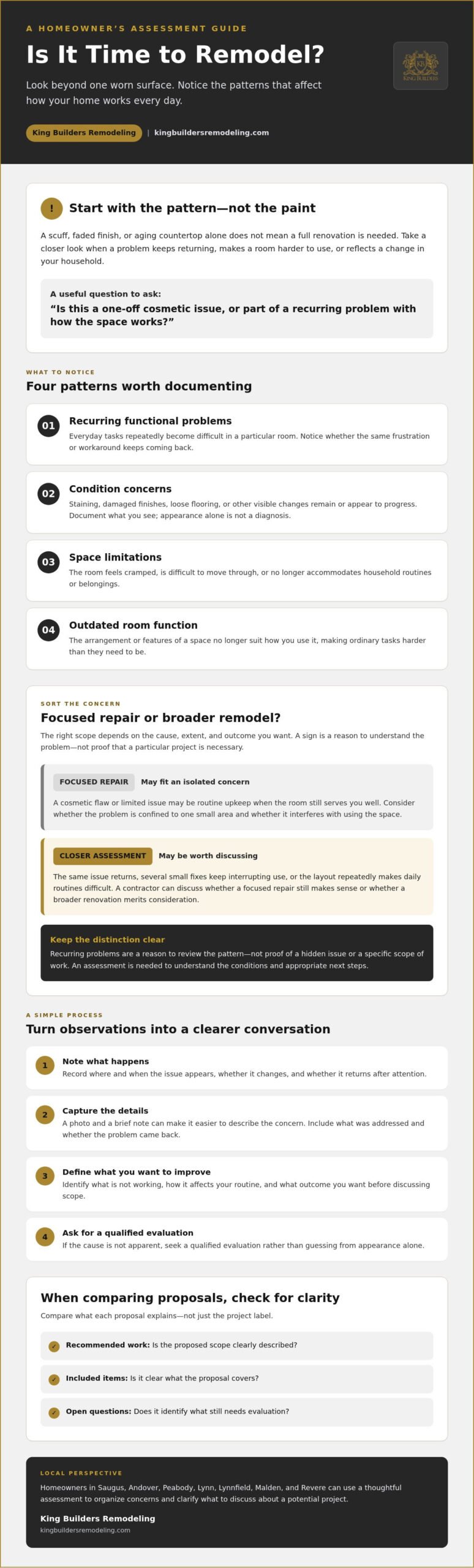
How Should Massachusetts Homeowners Assess Remodeling Signs?
A clear assessment turns a list of frustrations into a useful starting point for a conversation. Whether you’re in Saugus, Andover, Peabody, Lynn, Lynnfield, Malden, or Revere, use this process to organize what you’ve noticed without trying to diagnose the cause yourself.
- Document what you see. Note the room and location, when the issue appears, and whether it changes or returns. Photos can help show how a visible concern progresses. For space-related problems, record useful measurements and examples of routines the current layout disrupts.
- Prioritize concerns. Separate issues that affect how you use the home from appearance preferences. Keep condition concerns distinct from cosmetic updates, and seek qualified evaluation if you’re unsure what an observation means.
- Define your goals. Describe what you want the space to do differently. You might want a kitchen that better supports household routines or a basement room that works more effectively for its intended use. A clear goal keeps the discussion focused on the outcome, not just a list of symptoms.
- Seek professional input. Share your notes and priorities with a contractor who can discuss the concern and a possible scope. Ask what needs further evaluation and what questions remain before you decide how to proceed.
What should homeowners document before requesting an assessment?
Bring dated notes, photos, relevant room measurements, and specific examples of how the space interferes with daily routines. Also list what you want the room to do differently. These details help distinguish a condition concern from a finish or appearance preference, while leaving any diagnosis to a qualified professional.
How can local context shape remodeling planning?
Existing conditions and project details matter in Massachusetts homes, and requirements can differ across North Shore and Greater Boston municipalities. Municipal requirements can vary by project and location, so confirm applicable requirements with your local building department. If a concern involves a basement or another lower-level space, explain how you plan to use it when discussing the project.
Check permit, inspection, zoning, and code questions for the specific project and municipality rather than relying on a general checklist. Don’t assume that a particular approval or process applies. The signs you need a home remodel can frame the conversation, but an appropriate scope depends on the home, your goals, and local requirements.
What Should You Do After Noticing Signs You Need a Home Remodel?
Once you’ve identified a pattern, turn it into a clear project brief before contacting contractors. Describe the problem, the result you want, and the rooms involved. Instead of saying only that a kitchen feels frustrating, note which everyday tasks are difficult and what you’d like the room to support. Include questions you want answered, especially if you’re unsure whether the concern calls for a focused repair or a wider remodeling scope.
Use this short checklist to prepare:
- Problem: What have you observed, and does it recur?
- Desired outcome: What should the space do better?
- Project area: Which room or rooms are involved?
- Questions: What needs evaluation, and what should the proposed work include?
These notes help a contractor respond to your actual concerns instead of assuming that every item on a symptom list requires construction. They also give you a practical basis for comparing proposals. Look for a scope that addresses your documented goals, explains what is included, and identifies anything that needs separate evaluation. Full-service general contractors such as LINEAS Construction emphasize transparent project scopes and thorough planning to ensure every phase aligns with the homeowner’s goals. Clear communication matters too. You should understand the reasoning behind the proposed work and feel comfortable asking for clarification.
What should you ask a remodeling contractor?
Ask how the recommended scope responds to the issues you recorded and the outcome you want. Clarify what the work includes, what falls outside the scope, and whether any concerns need separate professional evaluation. If permits, inspections, zoning, or code questions may apply, ask how those project-specific requirements will be confirmed. Requirements can vary by project and municipality, so verify applicable details with the local building department.
How can homeowners take a clear next step?
Start with a conversation about the rooms involved, recurring concerns, and the changes you hope to make. King Builders Remodeling offers residential remodeling for kitchens, bathrooms, and basements, as well as home additions. Homeowners in Saugus, Andover, Peabody, Lynn, Lynnfield, Malden, and Revere can confirm local coverage when discussing a project.
You don’t need every detail settled before discussing your project. A thoughtful conversation can help clarify the concern and the scope worth considering, without treating one visible flaw as a commitment to a major renovation.
Take the Next Step Toward a Home That Works Better
The signs you need a home remodel are best understood as patterns, not isolated imperfections. If a problem keeps returning or a room no longer supports your routines, document what you’ve noticed and clarify what you want to change. Then discuss whether a focused repair or a broader remodeling scope better fits the concern and your goals.
King Builders Remodeling provides residential remodeling, home additions, and general contracting services. A clear conversation about your priorities can help you explore practical options for your home in Saugus, Andover, Peabody, Lynn, Lynnfield, Malden, or Revere.
Start with what isn’t working, share the outcome you have in mind, and contact King Builders Remodeling to discuss your project.
Frequently Asked Questions
Is one sign enough to know I need a home remodel?
Not necessarily. A dated finish or isolated defect may call for maintenance or a focused repair, not a larger project. Consider how serious the issue is, whether it returns after attention, and how much it affects daily use. These signs you need a home remodel can be useful prompts to investigate, but they aren’t a diagnosis. If you can’t identify the cause or the condition is changing, ask a qualified professional to assess it before deciding on a scope.
How do I know whether I need a repair or a remodel?
Start by asking whether the concern is isolated or connected to other problems in the same space. A focused repair may suit a clearly defined issue. Remodeling may be worth discussing if the room’s layout, function, or condition no longer meets your needs. A professional assessment can help clarify possible next steps, but a checklist alone can’t determine the cause or confirm the right scope for your home.
Can an outdated kitchen be a sign I need a remodel?
It can, particularly if the layout, storage, or work areas make routine tasks difficult again and again. Appearance alone doesn’t mean a renovation is necessary. Write down what isn’t working and what you’d like the room to do better, such as making everyday meal preparation easier. Then discuss whether a focused update or a broader kitchen remodeling plan fits your goals and the conditions in the space.
What should I do if I notice recurring water stains or damage?
Record where the change appears, when you first noticed it, and whether it returns or spreads. A stain is an observation, not proof of its cause or a reason by itself to remodel. If you can’t identify what’s behind it or the condition is worsening, seek an appropriate professional assessment. Once the concern is better understood, you can discuss whether a focused repair or a larger renovation makes sense.
Does an older home automatically need a remodel?
No. A home’s age alone doesn’t determine whether it needs renovation. Pay attention to the condition of its spaces, how well they support daily routines, and what you plan to do with the home. Repeated repair needs or rooms that no longer serve their purpose may deserve closer assessment. If you’re unsure about a condition, have it evaluated rather than assuming every older home requires a major project.
How much does a home remodel cost?
There’s no reliable single figure without knowing the rooms involved, existing conditions, materials, and proposed scope. Ask contractors to explain what their proposals include and identify items that need further evaluation before they can be confirmed. Comparing the scope and assumptions behind proposals is more useful than relying on a generic estimate. You can share your project details through King Builders Remodeling’s quote request page.
Do I need a permit for a home remodel in Massachusetts?
Requirements depend on the project and municipality, so a general checklist isn’t a final answer. Describe the proposed work to your local building department and confirm which requirements apply before work begins. A contractor can discuss project planning, but don’t assume every remodel follows the same process or needs the same approvals. Checking directly with the relevant town helps you get information specific to your project and location.
How do I choose a contractor after spotting remodeling signs?
Look for a contractor who listens to your concerns, explains the proposed scope clearly, and answers questions about planning and communication. Share your notes so the discussion reflects your home’s actual needs, and ask how local requirements will be checked when relevant. If your home is in Saugus, Andover, Peabody, Lynn, Lynnfield, Malden, or Revere, confirm service coverage as part of your conversation. For projects that require extensive spatial reconfiguration or high-end architectural craftsmanship, examining the work of custom builders like Maverick Design and Construction can provide a helpful benchmark for quality and collaborative planning. Choose a contractor whose approach feels transparent and aligned with your goals.