
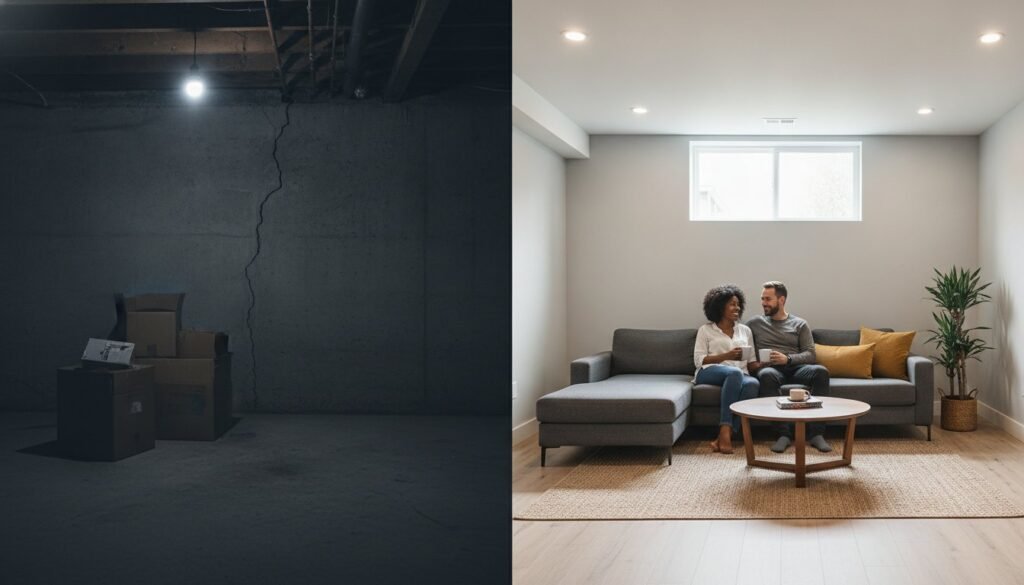
What if the most valuable square footage in your home is currently hiding behind a door you prefer to keep closed? For many homeowners across the North Shore and Greater Boston, the basement often becomes a forgotten zone filled with storage bins and a persistent, musty odor that drifts into the main living areas. You likely feel the squeeze of a growing family and wonder if those damp corners are just a typical quirk of an older Massachusetts house or something more serious.
We understand that the line between a simple “old house” smell and a structural necessity can feel blurry. This guide identifies the clear signs you need a basement renovation to help you protect your investment and reclaim your home. You will learn to distinguish between a quick cosmetic refresh and the vital repairs that prevent mold or water damage. We will walk through a practical checklist that evaluates your home’s health and demonstrates how a professional renovation increases your property value while finally giving your family the room it needs to breathe.
Key Takeaways
- Learn why persistent musty odors and visible mold are critical health warnings that require a deeper solution than simple surface cleaning.
- Understand how to identify the specific signs you need a basement renovation, such as foundation cracks or sagging floors, before they affect the upper levels of your home.
- Discover the difference between a cosmetic refresh and a structural renovation to ensure your project provides long-term stability and moisture protection.
- Identify how to transform a cluttered storage area into a functional, high-value living space that meets the needs of a modern household.
- Gain professional insight into navigating Massachusetts building codes and why a local expert assessment is vital before starting any demolition.
What Defines a Basement in Need of Renovation?
A basement renovation is a comprehensive undertaking that goes far beyond simple aesthetic upgrades. It integrates structural reinforcement, professional moisture management, and functional redesign to turn a subterranean area into a safe, healthy living space. For many homeowners, identifying the signs you need a basement renovation starts with a shift in perspective. You aren’t just looking for a prettier room; you’re ensuring the longevity of your entire home.
In New England, the basement serves as the critical anchor for the rest of the house. Understanding Basement design and structural considerations is essential because these spaces are prone to unique environmental stressors. If you ignore a damp wall or a hairline crack, the problem won’t stay downstairs. It eventually manifests as sagging floorboards or persistent odors in your kitchen or living room. A true renovation addresses these core issues before they compromise your upper floors.
The Difference Between Finishing and Remodeling
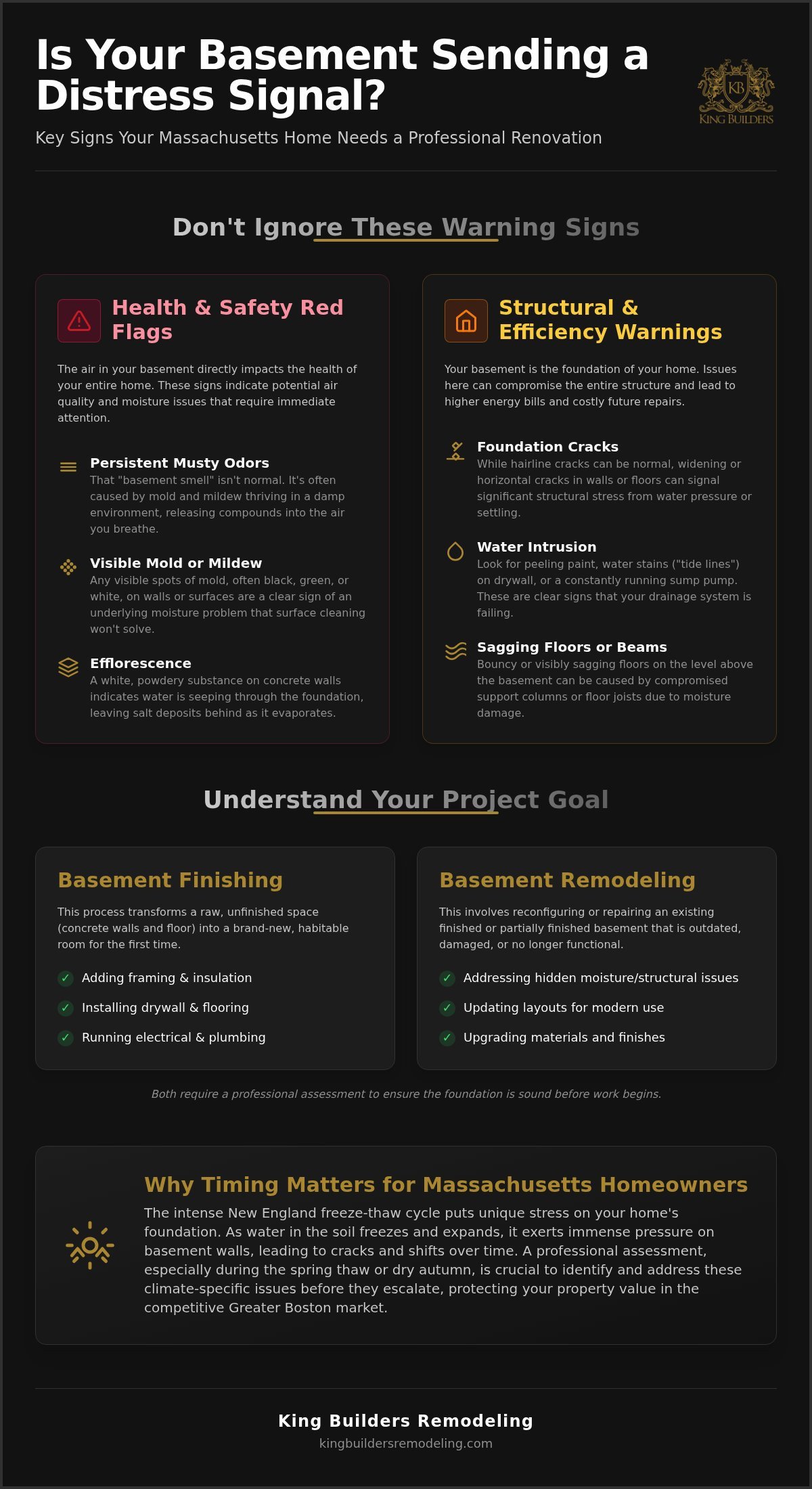
Many people use these terms interchangeably, but they represent different goals. Basement finishing involves taking a raw, concrete space and adding framing, insulation, and drywall to create a new room for the first time. Remodeling focuses on reconfiguring an existing finished space that no longer serves your needs or has hidden issues. Perhaps a previous owner cut corners, or the layout feels cramped for modern furniture and technology. Both paths require a professional assessment of your foundation. A renovation ensures that your new walls aren’t simply masking a deeper structural flaw that could lead to costly repairs later.
Why Timing Matters for Massachusetts Homeowners
The local climate plays a massive role in your home’s health. In communities like Saugus and across the North Shore, the intense freeze-thaw cycle puts immense pressure on foundation walls. Water in the soil expands as it freezes, which can lead to shifting or cracking over time. Spring and fall are the most critical times for a walkthrough. The spring thaw often reveals drainage failures, while the dry air of fall can highlight settling issues. Addressing these signs you need a basement renovation during these transitional seasons protects your property value. In competitive markets like Lynn or Melrose, a healthy, dry basement is a primary driver of home equity. If you’re unsure where to start, you should get a professional quote to evaluate your home’s unique needs.
Health and Safety Red Flags: The Non-Negotiable Signs
When you step into your basement, the first thing you notice shouldn’t be a heavy, damp scent. That classic “basement smell” isn’t just a harmless byproduct of an older home; it’s often the result of microbial volatile organic compounds produced by mold thriving in high humidity. These persistent odors are among the most common signs you need a basement renovation to protect your family’s well-being. Unlike a temporary “old house” quirk, these smells indicate that moisture is trapped within your walls or flooring, creating an environment where allergens can flourish.
Look closely at your concrete foundation walls for a white, powdery substance known as efflorescence. These salt deposits are left behind when water travels through the porous concrete of your Massachusetts home and evaporates on the interior surface. It’s a clear signal that hydrostatic pressure is pushing moisture into your living space. If left unaddressed, this constant dampness forces your HVAC system to work harder to dehumidify the air, significantly lowering your home’s energy efficiency and increasing monthly utility costs.
Moisture and Water Intrusion Indicators
Check your baseboards and the bottom of your drywall for “tide lines” or discolored stains. These marks are evidence of past flooding or consistent seepage that has wicked up into your finishing materials. If your sump pump runs constantly during a typical North Shore rainstorm, or if you notice peeling paint on your foundation walls, your current drainage system is likely failing. Surface cleaning is a temporary fix. A long-term solution requires a professional approach to moisture management to prevent the health problems caused by mold that often follow water intrusion. Homeowners in coastal neighborhoods face particularly acute moisture challenges, which is why working with a knowledgeable basement finishing contractor East Boston residents trust can make all the difference in achieving a lasting, dry result.
Air Quality and Your Family’s Health
The air in your basement doesn’t stay downstairs. Through a process known as the Stack Effect, warm air rises and escapes through the upper levels of your house, creating a vacuum that pulls basement air and potential pollutants upward into your bedrooms and kitchen. This means that poor air quality in your lowest level directly impacts the air your family breathes every day. A high-quality renovation must include modern vapor barriers and dedicated ventilation systems to break this cycle and ensure a healthy living environment. If you’ve noticed these red flags, a professional moisture assessment is the best way to ensure your home remains a safe and reliable sanctuary for your family.
Structural Integrity and Efficiency Warnings
Many homeowners first notice signs you need a basement renovation not in the cellar itself, but in the rooms directly above it. If you’ve felt a slight dip in your kitchen floor or noticed a door that suddenly sticks in its frame, the culprit is often found in the basement’s support system. Structural issues like sagging beams or compromised joists eventually ripple through the entire house. Addressing these problems early prevents a localized basement issue from becoming a massive structural repair for your whole home.
Not all foundation cracks are created equal. Vertical cracks often result from natural settling, but horizontal cracks are a major red flag. These often indicate that the soil outside is putting too much pressure on your walls, potentially leading to a foundation failure. Following EPA guidance on basement moisture is a critical first step before any aesthetic work begins. Ensuring your foundation is dry and stable is the only way to protect the investment you make in new flooring and walls.
Foundation and Framing Concerns
In older Saugus or Lynn homes, it’s vital to check the sill plates during your inspection. These wooden members sit directly on the foundation and are prone to rot or pest damage if moisture isn’t managed. Structural framing is the backbone of any successful transformation. If your current “finished” basement feels flimsy or uneven, it’s likely because the original framing didn’t account for the unique New England climate. For a deeper look at the technical requirements, our Basement Remodeling Contractor Massachusetts Pillar guide provides a comprehensive roadmap for structural planning.
Energy Inefficiency and Utility Costs
An unfinished or poorly insulated basement acts as a “thermal hole,” sucking heat out of your home during harsh Massachusetts winters. You might notice cold drafts near the floorboards or find that your furnace never seems to stop running. This often happens at the rim joists, the area where the house frame meets the foundation. Most older homes lack proper sealing here, allowing icy air to seep in unchecked. Replacing drafty, single-pane basement windows with modern, energy-efficient units is another key step in sealing your home’s energy envelope.
Renovating is the most cost-effective time to upgrade these “invisible” systems. Adding modern insulation provides a high ROI through lower utility bills and improved comfort. It’s also the safest opportunity to replace outdated wiring or aging plumbing. Bringing these systems up to current building codes ensures your home is not just beautiful, but fundamentally sound and efficient. These upgrades are subtle but powerful signs you need a basement renovation to modernize your property’s core infrastructure.
Functional Obsolescence: When Your Space No Longer Works
Many homeowners assume that if their basement is dry, it’s “fine.” However, functional obsolescence is one of the most overlooked signs you need a basement renovation. This happens when the space exists but provides zero value to your daily life. You might find your basement has slowly transformed into a “junk room” or a graveyard for old furniture and broken appliances. When your square footage becomes a storage locker for bins you haven’t opened in years, it stops being a part of your home and starts being a burden.
Older basement finishes often feature awkward layouts that don’t accommodate modern lifestyles. Small, choppy rooms or poorly placed support pillars can make it impossible to fit a sectional sofa or a home theater setup. Lighting is another major factor. If the space feels like a “dungeon” with flickering fluorescent tubes and low ceilings, your family will naturally avoid it. A modern renovation focuses on open floor plans and layered lighting to make the lower level feel as inviting as your living room upstairs.
The Lifestyle Audit: 5 Questions to Ask
To determine if your current space is obsolete, take a moment to evaluate how you use your home. Ask yourself these five questions:
- Do you have a dedicated, quiet space for a productive home office?
- Is there a safe, climate-controlled area for the kids to play or for a home gym?
- Does your upstairs feel cramped because the basement isn’t utilized for daily activities?
- Is the lighting so poor that you only go down there when it’s absolutely necessary?
- Could your home’s value benefit from an additional legal bedroom or guest suite?
Planning for Future Resale Value
A modern, permitted basement renovation is one of the smartest investments for North Shore homeowners. In competitive markets like Salem or Peabody, adding usable square footage is often more cost-effective than building an addition. Given that the median home age in Massachusetts is approximately 57 years, many local properties still feature outdated layouts that don’t meet today’s standards. One of the biggest drivers of ROI is the installation of egress windows. These aren’t just for safety; they allow a basement room to be legally classified as a bedroom, which significantly boosts your property’s market value. The same principles apply throughout the Greater Boston area, and homeowners seeking a trusted basement finishing contractor East Boston families recommend will find that local expertise in navigating permits and coastal moisture challenges is essential to maximizing that return.
When planning these upgrades, material choice is vital for longevity. Choosing the Best Basement Flooring Massachusetts homeowners prefer, such as luxury vinyl plank, ensures the space remains beautiful even in our humid climate. If you’re also considering extending your renovation beyond the basement, understanding how a professional hardwood floor install Massachusetts homes require can help you select the right wood species and acclimation process to withstand our coastal humidity throughout the rest of your home. By addressing these signs you need a basement renovation now, you ensure your home grows with your family’s needs while securing a higher resale price later.
Next Steps: Professional Assessment and Planning
Identifying the signs you need a basement renovation is a vital first step, but a simple visual check usually isn’t enough to catch deep-seated issues. Many structural and moisture problems hide behind old drywall or under layers of floor paint. Attempting a DIY assessment might miss a failing sill plate or a subtle foundation shift that could compromise your entire project. Before you begin any demolition, consulting a general contractor in Saugus is essential to ensure your home’s safety and your project’s longevity.
Consulting with a Principled Expert
When you invite a professional for a walkthrough, you’re gaining a partner who understands the high stakes of construction. At King Builders Remodeling, we act as your dedicated guide, prioritizing structural integrity and moisture control before we ever discuss paint colors or layout ideas. We examine the “bones” of the space to ensure your investment is protected from the ground up. You can learn more about our family-run approach and our decade of experience serving the North Shore on our About Us page. We believe in a transparent process that makes you feel secure and supported throughout the entire transformation.
Navigating Massachusetts Building Codes
Massachusetts construction is governed by the state building code, yet specific requirements for ceiling heights and egress windows often vary by town. For example, the permit process and inspection schedules in Lynn might differ slightly from those in Peabody or Salem. Navigating these municipality nuances requires local expertise to ensure your project is legally compliant and safe for your family. While we handle the heavy lifting of project approvals, we always recommend that homeowners verify specific requirements with their local building department. This collaborative approach ensures that every detail, from framing to electrical work, meets the highest professional standards.
A successful renovation starts with a budget that prioritizes structural health before aesthetic finishes. It’s tempting to focus on the “beauty” of the space, but addressing signs you need a basement renovation like poor insulation or outdated wiring must come first. We help you allocate your resources effectively, ensuring that moisture management and structural framing are solved correctly before we move into the finishing stages. This methodical, steady rhythm mirrors a well-organized project timeline, turning a complex home improvement task into a predictable and rewarding experience for your family.
Start Your Home’s Next Chapter Below Ground
Identifying the signs you need a basement renovation is the first step toward protecting your home’s foundation and expanding your family’s living space. Whether you’ve noticed persistent musty odors, structural cracks, or simply realize your current layout no longer serves your modern needs, these indicators are a call to action. Addressing these issues correctly ensures your home remains a safe, valuable asset for years to come. You don’t have to settle for a damp storage area when you could have a vibrant, healthy room that adds genuine utility to your daily life.
As a family-owned business with over 10 years of experience serving Saugus, Peabody, and the Greater Boston area, King Builders Remodeling specializes in structural framing and high-quality interior transformations. We focus on ethical standards and professional craftsmanship to ensure your project is built to last. You deserve a partner who understands the unique challenges of Massachusetts homes and works with you to bring your vision to life with quiet confidence and reliability.
We look forward to helping you turn your basement from a forgotten zone into a beautiful, functional part of your home that your family will enjoy for generations.
Frequently Asked Questions
What are the first signs that my basement needs remodeling?
The first signs you need a basement renovation often involve sensory changes like persistent musty odors or visible white powder on concrete walls. You might also notice that the space no longer serves a purpose for your family, becoming a cluttered storage area instead of a usable room. In the North Shore’s humid climate, these indicators suggest that moisture is bypassing your current barriers and affecting your home’s air quality.
Is a basement remodel worth the investment in Massachusetts?
A basement remodel is one of the most cost-effective ways to increase home value in the Greater Boston area. While the national average return on investment is approximately 70%, the high cost of property in cities like Newton or Peabody often makes added square footage even more valuable. It allows you to expand your living space without the massive expense or zoning hurdles of a traditional home addition.
How do I know if the cracks in my basement walls are structural?
Not all cracks indicate a foundation failure, but their orientation matters. Vertical cracks are common results of natural settling in older Massachusetts homes, but horizontal cracks are serious signs you need a basement renovation and professional structural repair. These horizontal lines often mean the soil outside is exerting too much pressure. You should always have a principled expert evaluate any crack wider than a quarter inch.
Can I finish a basement that has previous water damage?
You can absolutely finish a basement with previous water damage, provided the root cause is permanently resolved first. We prioritize fixing the “bones” of the structure, which includes professional waterproofing and structural framing repairs. Covering up water damage with new drywall will only lead to mold growth and wasted money. A successful project requires a dry foundation and a modern vapor barrier to protect your new living space.
Do I need a permit for a basement renovation in Saugus, MA?
Most basement projects in Saugus require a building permit, especially if you’re adding framing, electrical systems, or plumbing. The Massachusetts State Building Code, 780 CMR, sets the baseline, but specific local requirements for ceiling heights and egress can vary between Saugus, Lynn, and Peabody. We always recommend that homeowners confirm specific permit needs and project approvals with their local building department before starting any construction work.
What is the average lifespan of a basement finish before it needs a renovation?
A typical basement finish lasts between 15 and 25 years before the layout or materials feel outdated. However, in our local climate, older finishes often succumb to moisture issues or “junk room” syndrome much sooner. Modern renovations use moisture-resistant materials like luxury vinyl plank and advanced insulation, which significantly extend the lifespan of the space compared to the wood-paneling or carpeted basements common in older North Shore properties.
How can I tell if my basement has a mold problem behind the walls?
Identifying mold behind finished walls requires looking for subtle clues. Persistent damp smells that don’t go away with a dehumidifier are a primary indicator. You should also check for “tide lines” or discoloration at the base of your drywall and peeling paint on foundation walls. If family members experience unexplained allergies or respiratory issues while at home, it’s a strong signal that moisture is trapped behind your basement’s finishing materials.
What is the most important factor in a successful basement renovation?
The most important factor is prioritizing structural health and moisture management over aesthetic choices. You can choose the most beautiful flooring and lighting, but the project will fail if the foundation isn’t dry and sound. A successful renovation focuses on high-quality framing and proper ventilation first. This ethical approach ensures that your new home office or family room remains a safe and comfortable environment for decades rather than just a few seasons.