
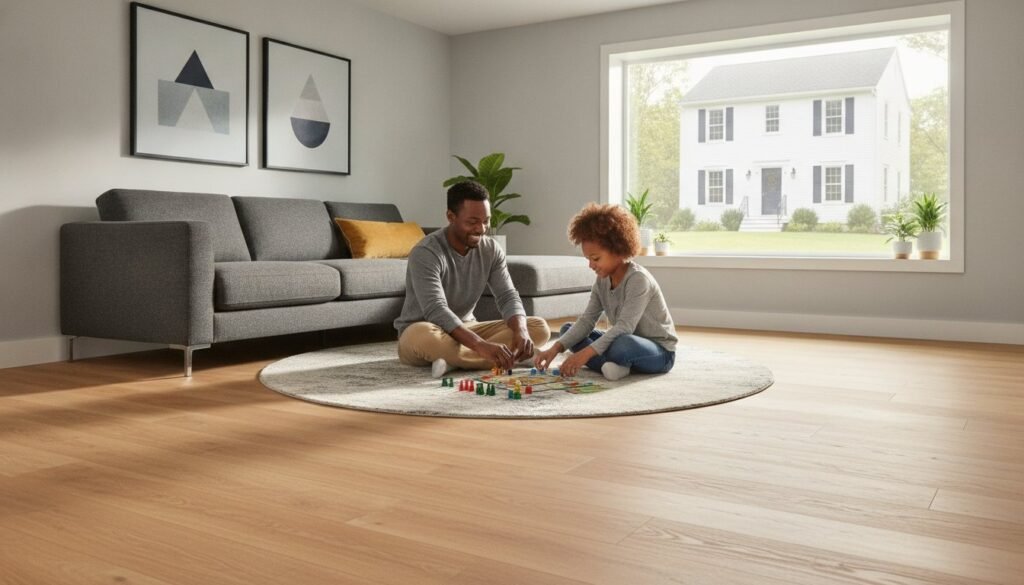
In Massachusetts, a basement floor isn’t just a surface; it’s a frontline defense against the Atlantic’s humidity and the North Shore’s freezing winters. If you’ve ever stepped onto a cold concrete slab in January or worried about musty smells during a humid July in Peabody or Salem, you know that finding the best flooring for basement Massachusetts homes requires more than just picking a pretty color. It’s about choosing a material that can handle groundwater seepage and temperature swings while still feeling like a natural extension of your living space.
We understand that your basement is an investment, and you want a solution that adds genuine value without the constant fear of mold or water damage. In this 2026 guide, we’ll walk you through the most durable, moisture-resistant, and comfortable flooring options specifically engineered for our unique local climate. You’ll discover how the right subfloor system and high-quality materials can transform a damp storage area into a warm, dry retreat that lasts for decades. Let’s look at how to balance professional standards with the cozy aesthetic your family deserves.
Key Takeaways
- Learn how to combat the unique humidity and temperature challenges that typically affect North Shore and Greater Boston basements.
- Compare high-performance materials like LVP and ceramic tile to find the best flooring for basement Massachusetts projects this year.
- Discover the “thermal break” secret that turns a freezing concrete slab into a comfortable, warm living space for your family.
- Identify why professional moisture management and subfloor leveling are critical for meeting local building codes and protecting your home’s value.
Understanding the Massachusetts Basement Environment
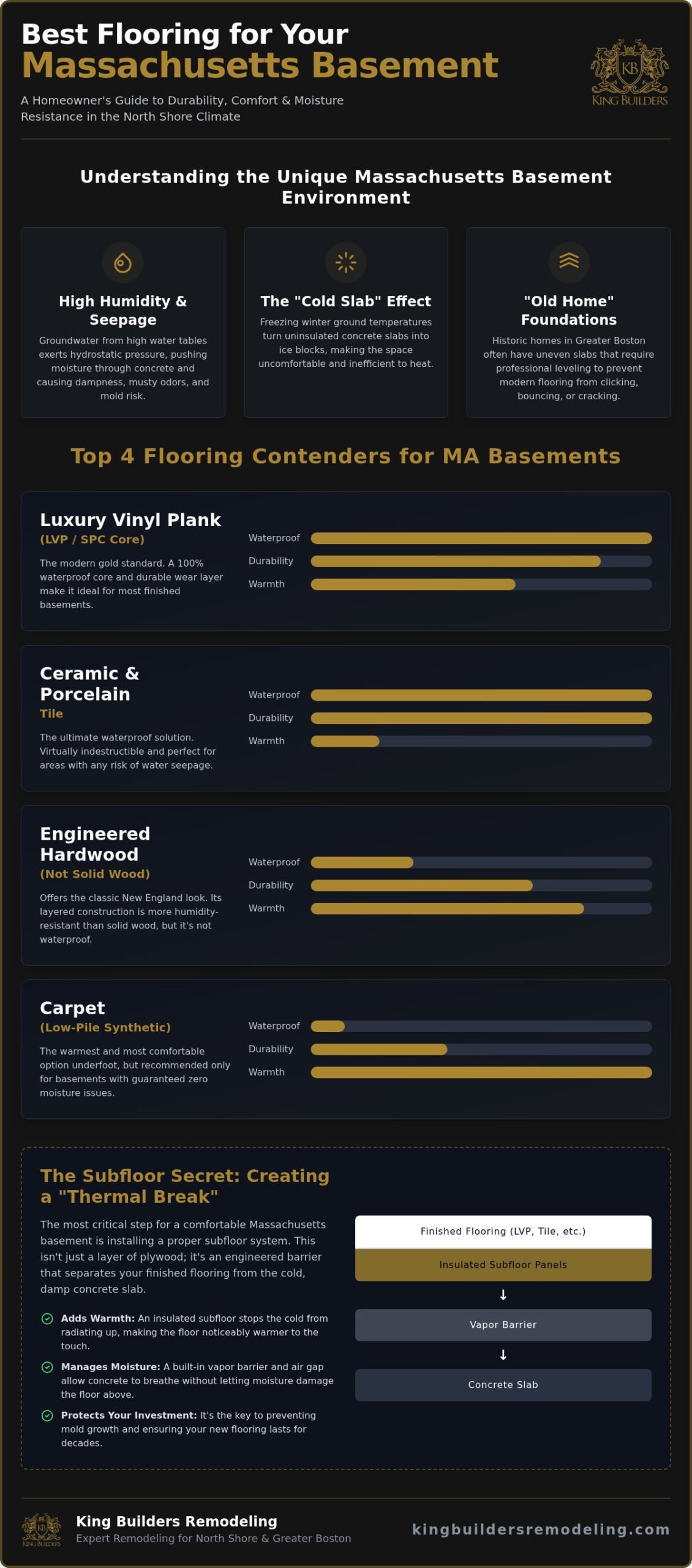
Massachusetts basements deal with a level of environmental stress that many national guides simply don’t account for. Between the high water tables of the North Shore and the intense seasonal freeze-thaw cycles, your foundation is constantly under pressure. To find the best flooring for basement Massachusetts homes, you first have to understand the science of the space. Hydrostatic pressure is the force exerted by groundwater against your foundation walls and floor slab, which can push moisture through even the smallest pores in the concrete. Proper Basement construction and design must account for this pressure to ensure a dry interior. Without addressing this, even the most expensive flooring will eventually fail.
Then there’s the “cold slab” issue. In cities like Danvers or Beverly, winter temperatures can drive the ground temperature down significantly, making an uninsulated concrete floor feel like an ice block underfoot. Before you pick a material, look for signs of trouble like efflorescence, which are white powdery salt deposits, or dark, damp spots on the concrete. If you’re noticing persistent musty odors or visible moisture damage, it may be worth reviewing the signs you need a basement renovation before committing to new flooring. We also strongly recommend testing for radon. Modern Massachusetts building standards often require mitigation if levels are high; it’s much easier to address this before your new floor is installed than to tear it up later.
Moisture vs. Flooding: Knowing the Difference
Ambient humidity is that heavy, damp smell often felt in Saugus and Lynn during a humid July. Active seepage is a different beast entirely, often appearing as puddles during a Nor’easter. Vapor barriers are non-negotiable in our region because they prevent moisture from migrating upward and ruining your investment. Even if your basement hasn’t flooded in years, constant moisture vapor can cause mold to grow under improper flooring. We prioritize these barriers to ensure your finished space remains healthy and dry.
The “Old Home” Challenge in Greater Boston
Historic foundations in Salem and Peabody often feature slabs that are far from level. If you’re working with an older home, you’ll likely need self-leveling compounds to create a flat surface for modern planks or tiles. Without this professional prep, your new floor will “bounce” or click when you walk on it, leading to cracked joints over time. It’s also wise to consult your local building department, as permit requirements for structural changes or habitability can vary significantly between municipalities. What works for a basement in Revere might face different code enforcement in Malden.
The Top 4 Flooring Contenders for MA Basements
Selecting the best flooring for basement Massachusetts projects requires a shift in mindset. You aren’t just choosing a style; you’re choosing a material that can survive the specific humidity and temperature swings of the North Shore. While traditional choices like carpet were once the norm, modern technology has introduced waterproof materials that offer far better longevity and health outcomes for your home. We focus on options that provide a balance of durability, comfort, and high-end aesthetic appeal.
Luxury Vinyl Plank (LVP) and SPC
Luxury Vinyl Plank, specifically Stone Polymer Composite (SPC), has become the modern gold standard for finished basements in cities like Melrose and Malden. These materials feature a 100% waterproof core that won’t swell or buckle if your basement experiences minor seepage. For busy family rooms, we recommend a wear layer of at least 20 mils to resist scratches from pets and heavy furniture. Click-lock installation is generally preferred over glue-down methods for concrete slabs. This “floating” system allows the floor to expand and contract slightly with seasonal temperature changes without breaking the seal. Understanding the causes and solutions for basement moisture helps illustrate why these non-organic materials are so vital for preventing mold growth behind your baseboards.
Tile and Engineered Options
Ceramic and porcelain tile remain the ultimate waterproof solution for homeowners in Swampscott or Revere who prioritize a permanent, easy-to-clean surface. Tile is virtually indestructible and handles groundwater issues better than any other material. However, it can feel quite cold in a Massachusetts winter if installed directly over concrete. If you desire the warmth of real wood, engineered hardwood is the only viable option. Unlike solid hardwood, which is a mistake in a basement due to its tendency to warp, engineered wood is constructed in layers that resist the effects of high humidity. It provides that classic New England look while maintaining structural integrity in a subterranean environment.
Modern carpeting still has a place in dedicated home theaters or guest bedrooms where maximum warmth is the priority. If you choose carpet, we suggest low-pile synthetic fibers with a moisture-resistant pad to prevent the “basement smell” caused by trapped dampness. Maintenance for these materials varies; while tile and LVP only require a quick mop, carpet needs regular deep cleaning to stay fresh. If you’re feeling overwhelmed by the choices, we can help you evaluate your basement’s specific needs to find the perfect fit for your lifestyle and foundation type.
The Subfloor Secret: Insulation and Thermal Breaks
A beautiful surface is only half the battle. If you’ve ever spent a winter morning in a North Shore basement, you’ve felt that bone-chilling cold rising through the floor. This happens because concrete is a terrible insulator. To achieve the best flooring for basement Massachusetts homes, you must install a thermal break. This is a layer of insulation that separates your finished floor from the cold concrete slab. Without it, your feet will always be cold, no matter how high you crank the thermostat. A proper thermal break stops the transfer of heat, keeping your living space warm and your energy bills manageable.
We often see DIY guides suggest laying vinyl directly on the slab. In our experience, this leads to discomfort and potential moisture trapping. Professional subfloor panels, which feature integrated vapor barriers and foam insulation, provide a much higher R-value than a thin underlayment. These systems also allow for minimal airflow beneath the floor, which is a key strategy for preventing mold growth. Alternatively, sleeper systems use a framework of pressure-treated lumber, but these take up more vertical space. This is a critical consideration in cities like Lynn or Revere, where older basements might already have low ceilings. Per the Massachusetts State Building Code (780 CMR), habitable rooms generally need a minimum ceiling height of 7 feet. Every inch you add to the floor height is an inch you lose from the ceiling.
Vapor Barriers and Underlayments
Moisture protection is non-negotiable in our damp climate. We typically recommend a heavy-duty vapor barrier, often 6-mil polyethylene or higher, to prevent ground moisture from reaching your floor. If you’re opting for a floating floor, an acoustic underlayment is also vital. It damps that hollow, “clicky” sound and makes the space feel more substantial. This stage is a core part of any comprehensive basement remodeling project, as it sets the foundation for everything that follows. We ensure every layer is compatible with your chosen material to prevent premature wear.
Radiant Heating Options
For the ultimate in luxury, electric radiant heating mats can be installed directly beneath tile or LVP. While hydronic systems are more common in new construction slabs, electric mats are often more practical for a remodel. They provide consistent, gentle heat that turns a damp basement into the coziest room in the house. While there’s an upfront cost, the long-term comfort in a Massachusetts climate is often well worth the investment for homeowners who plan to stay in their homes for decades. Most modern LVP and tile options are specifically rated for use with these heating systems.
Choosing the Best Floor for Your Lifestyle
The technical requirements of a North Shore foundation are non-negotiable, but your daily routine should dictate the final surface. Whether you’re in a classic Saugus colonial or a modern Beverly ranch, the best flooring for basement Massachusetts homeowners can choose depends on how the room functions. A space meant for a toddler’s playroom requires different priorities than a professional home office or a high-impact fitness center. By matching the material to your lifestyle, you ensure the room remains a favorite part of your home for years.
- For Kids and Pets: Luxury Vinyl Plank (LVP) is the clear winner here. Its thick wear layer resists scratches from claws and the inevitable spills of a busy household. It’s easy to sanitize and won’t harbor allergens like older carpets might.
- For In-Law Suites: Comfort and safety are paramount. We recommend cork-backed vinyl or engineered hardwood, which offer a softer feel underfoot and better slip resistance for older family members.
- For Home Gyms: Look for impact resistance. While rubber tiles are standard, high-quality SPC vinyl can also handle the weight of equipment if paired with the right high-density underlayment to absorb sound and vibration.
- For Home Offices: Ergonomics and professional appearance matter. A hard, level surface is essential for rolling office chairs, and modern wood-look planks provide a sophisticated backdrop for video calls.
Design and Aesthetic Trends for 2026
Basements naturally lack the abundant light found on upper floors. To combat this, the 2026 trend favors lighter, natural wood tones like sand, light oak, and soft greys to make the space feel brighter and more open. Wide plank flooring is also highly popular right now, as fewer seams create a cleaner look that makes smaller rooms feel more expansive. If your project includes a basement kitchenette or wet bar, we often coordinate the flooring with your kitchen remodeling vision to create a cohesive, open-concept feel throughout the lower level.
The Budget vs. Value Framework
We always advise clients to splurge on what they can’t see. Investing in high-quality moisture barriers and professional subfloor leveling is far more important than buying the most expensive top-layer material. A mid-range floor installed on a perfect, dry subfloor will always outlast a premium floor laid on a damp, uneven slab. Beyond personal enjoyment, installing a professionally finished, moisture-managed floor significantly boosts your home’s appraisal value by transforming a utility area into legitimate, habitable square footage.
Professional Installation: The King Builders Difference
Choosing the best flooring for basement Massachusetts residences is ultimately a decision about long-term reliability. While the materials we’ve discussed provide the foundation for a beautiful space, the execution of the install determines whether that beauty lasts for decades. In our region, DIY attempts frequently run into trouble because they miss the subtle signs of hydrostatic pressure or fail to use the correct self-leveling compounds on century-old foundations. We bring over 10 years of family-owned expertise to every project, ensuring that your vision is supported by professional craftsmanship. Our team manages the complex transitions around stairs, support columns, and utility areas, creating a polished look that increases your home’s overall value.
Accountability is the cornerstone of our service. As a local business, we understand that we aren’t just working on a house; we are helping a neighbor improve their life. We take pride in our reputation across the North Shore and Greater Boston, standing by our word and our work. This human element is what sets a principled expert apart from a generic contractor. We don’t just lay planks; we build a partnership with you to ensure every detail, from the moisture barrier to the baseboards, meets our high standards of integrity and longevity.
Our Local Process in Saugus and Beyond
From the moment you receive your initial quote to the final walkthrough, you can expect a methodical and organized timeline. We understand that construction can be disruptive, so we maintain a clean and efficient job site in every neighborhood we serve, from Lynn to Melrose. Our deep knowledge of Massachusetts building codes allows us to guide you through the permit process with confidence. It is wise to remember that permit costs and zoning rules vary by municipality, so we always suggest checking with your local building department in cities like Salem or Peabody to confirm specific requirements for your project. We handle these professional standards so you can focus on the excitement of your home’s renewal.
Next Steps for Your Basement Project
Starting your transformation is a straightforward process. To prepare for a flooring estimate, we suggest identifying any known moisture issues and clearing the workspace so we can get an accurate measurement of the slab’s condition. We are proud to serve homeowners in Newton, Andover, Danvers, and throughout the Greater Boston area, including homeowners looking for a trusted basement finishing contractor East Boston residents can rely on for coastal moisture challenges. When you are ready to move from vision to action, our team is here to provide the steady hand you need for a successful remodel. You can take the first step today by reaching out to our family-owned team.
Your Vision for a Warm and Dry Living Space
Creating a functional, comfortable basement starts with acknowledging the unique environmental demands of the North Shore. By prioritizing moisture managed subfloors and high performance materials like 100% waterproof LVP, you ensure your renovation stands the test of time. Finding the best flooring for basement Massachusetts homes is a balance of technical preparation and personal style that ultimately turns a cold slab into a cherished family retreat.
As a family owned and operated general contractor since 2014, King Builders Remodeling specializes in navigating these local challenges. We are a fully licensed and insured Massachusetts General Contractor, bringing a decade of expertise in structural framing and moisture management to every neighborhood from Saugus to Andover. You deserve a partner who values your home’s integrity as much as you do.
We look forward to helping you create a space that adds lasting value and comfort to your daily life. Your dream basement is well within reach with the right plan and a dedicated team by your side.
Frequently Asked Questions
Is LVP really the best flooring for a wet basement in Massachusetts?
Luxury Vinyl Plank is widely considered the best flooring for basement Massachusetts homes because its 100% waterproof core doesn’t swell or rot when exposed to moisture. It’s an ideal choice for the high humidity levels we often see in Saugus and Lynn. However, if your basement has active groundwater flooding, you must address the drainage issues first. LVP handles dampness and minor seepage beautifully, but it isn’t a substitute for a dry foundation.
Do I need a vapor barrier if my basement floor is concrete?
You should always use a vapor barrier over a concrete slab in a New England basement. Concrete is naturally porous and allows moisture vapor to migrate upward from the soil. Without a barrier, this dampness can get trapped under your new flooring, leading to mold growth or adhesive failure. We recommend a high quality 6-mil polyethylene barrier or an integrated subfloor system to keep your finished space dry and healthy for years to come.
Can I put hardwood flooring in my basement?
Solid hardwood is generally not recommended for basements in cities like Peabody or Danvers because it expands and contracts too much with our seasonal humidity changes. Instead, you should choose engineered hardwood. It features a real wood top layer bonded to a stable plywood base that resists warping. This gives you the classic New England aesthetic you want while providing the structural stability necessary for a subterranean environment over a concrete slab.
How do I stop my basement floor from being so cold?
The most effective way to stop a cold floor is to install a thermal break between the concrete and your finished material. Using insulated subfloor panels or a high density foam underlayment creates a barrier that prevents heat from escaping into the ground. For maximum comfort during our freezing North Shore winters, you can also install electric radiant heating mats. These systems work exceptionally well under tile or LVP to provide consistent, gentle warmth.
Do I need a permit to change the flooring in my basement in MA?
If you’re simply replacing existing flooring, a permit is typically not required in most Massachusetts municipalities. However, if you’re finishing an unfinished basement for the first time, you’ll need a building permit to ensure the project meets 780 CMR state codes. Requirements can vary between towns like Revere and Malden, so we always recommend a quick call to your local building department to confirm their specific rules before starting your renovation project.
What is the most durable flooring for a basement with pets?
Luxury Vinyl Plank with a thick wear layer is the most durable choice for households with pets in the North Shore area. It is highly resistant to scratches from claws and won’t stain if accidents occur. Porcelain tile is another fantastic option because it’s virtually indestructible and very easy to sanitize. Both materials provide a long lasting surface that can handle the daily wear and tear of active dogs while maintaining a beautiful, professional appearance.
Should I level my basement floor before installing vinyl planks?
Leveling your slab is a critical step that you shouldn’t skip if you want a successful installation. Most modern vinyl planks use a click-lock system that requires a flat surface to stay secure. If your floor has dips or humps, which are common in older homes in Salem and Beverly, the joints can eventually crack or pull apart. Using a self-leveling compound creates the smooth foundation needed for a floor that feels solid and silent underfoot.
How long does a typical basement flooring installation take?
A typical basement flooring installation for a standard 800 square foot space usually takes between two and four days. This timeline includes essential preparation steps like cleaning the slab, installing vapor barriers, and acclimating the materials to your home’s environment. If your project requires extensive floor leveling or a complex subfloor system, it might take a bit longer. We prioritize an efficient workflow to minimize disruption to your daily routine in Andover or Newton.