
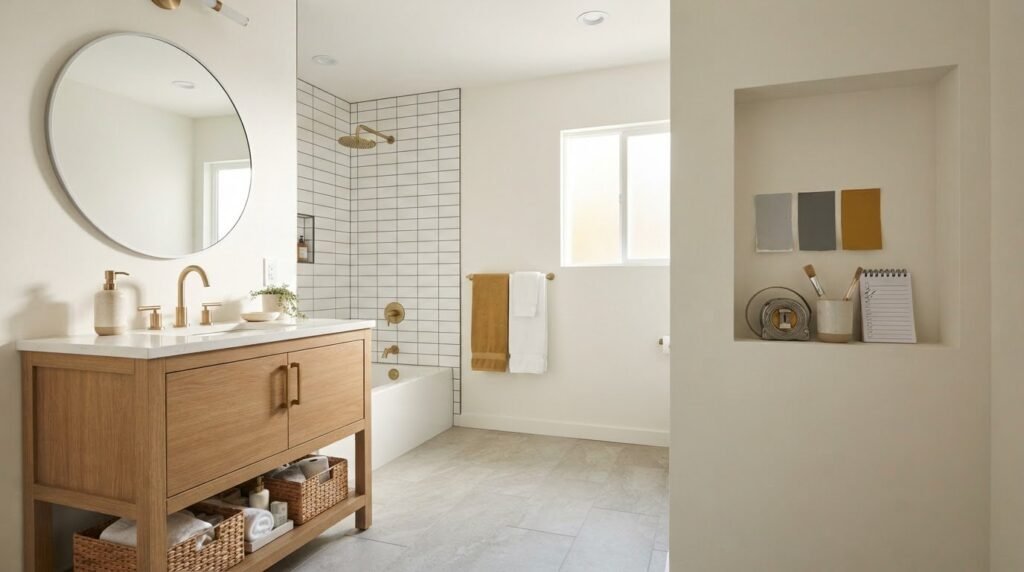
The cheapest-looking bathroom fix can become costly if it covers up a problem that needs attention. The best bathroom remodel ideas on a budget start with the room’s condition and how your household uses it, not just the latest finishes.
If a full renovation feels out of reach, start by separating cosmetic updates from repairs the room needs. A fresh coat of paint or updated hardware can make a visible difference when the surfaces are sound. Worn materials, recurring moisture, or fixtures that no longer work well call for a more considered plan. Choosing where to spend, and where a quick refresh is enough, helps you avoid paying twice for the same improvement.
This guide covers practical ways to refresh a bathroom, prioritize updates, and protect function and durability along the way. You’ll find ideas for cosmetic changes, signs that a larger remodel may be worthwhile, and tips for planning around your home’s needs. For homeowners in Saugus, Andover, Peabody, Lynn, Lynnfield, Malden, and Revere, the goal is a bathroom that feels renewed without sacrificing the quality you rely on every day.
Key Takeaways
- Start with the bathroom’s condition and daily needs to decide which updates matter most.
- Explore bathroom remodel ideas on a budget by refreshing suitable surfaces, improving lighting or hardware, and making storage work harder.
- Keep usable fixtures when they’re in good condition, but don’t let cosmetic fixes hide damage or persistent problems.
- Set the project scope before choosing finishes, especially if fixtures or the layout may change.
- When surface updates aren’t enough, a considered bathroom remodeling plan can address broader renovation needs.
Bathroom Remodel Ideas on a Budget: Start With the Right Priorities
A budget-conscious remodel isn’t simply a matter of choosing the least expensive finishes. It’s a planned refresh that addresses what the room needs before adding optional upgrades. Look at the bathroom as a whole: its surfaces, fixtures, storage, lighting, and how comfortably it supports your daily routine. The general overview of Bathroom spaces can help frame how these elements work together, but your home’s condition should guide the actual plan.
Separate visible wear from conditions that may need repair. Peeling paint or dated hardware may be cosmetic concerns. Recurring dampness, loose or damaged surfaces, and persistent maintenance issues deserve closer attention before they’re covered or replaced. A surface refresh can make sense when the underlying materials are sound. If an item is damaged or a problem keeps returning, plan for assessment and repair rather than relying on a finish to disguise it.
Prioritizing function and condition keeps a bathroom refresh focused on improvements that matter every day, not just the ones that look appealing at first. It also helps you reserve room in your plan for essential work before considering optional changes.
How to decide what your bathroom needs first
Walk through the room and note worn finishes, frustrating storage, poor lighting, and recurring maintenance concerns. Mark each item as either a condition that needs attention or a cosmetic preference. Then consider your household’s routines. A crowded counter may point to a storage need, while hard-to-clean surfaces may matter more than a decorative upgrade. This inventory turns a long wish list into a practical order of priorities.
Be specific as you make the list. Instead of writing “improve the vanity,” note whether the issue is limited counter space, drawers that are difficult to use, or lighting that makes daily tasks harder. Clear descriptions make it easier to compare possible updates and avoid adding work that doesn’t solve a real problem.
Set a project scope before choosing finishes
Write down which surfaces, fixtures, and storage areas are included, and which will stay as they are. Refreshing existing finishes is a different scope from changing the room layout, which can add complexity because more parts of the bathroom may be affected. If a broader plan is taking shape, residential bathroom remodeling can bring the work into a considered renovation scope.
Decide whether fixtures and the layout will stay in place before selecting finish materials. That choice keeps design decisions aligned with the work you intend to do, rather than leading you to choose finishes that may need to change later. Leave some flexibility, too. Existing materials can reveal conditions that weren’t visible during an initial walk-through, and the plan may need to adapt once they’re assessed.
For homeowners in Saugus, Andover, Peabody, Lynn, Lynnfield, Malden, and Revere, this measured approach can be especially useful when a bathroom has a mix of older finishes and newer updates. You don’t need to renew everything at once. Identify what supports safe, comfortable daily use, what’s sound enough to keep, and what would make the room work better for you. Let those priorities set the boundaries for the ideas you consider next.
Affordable Bathroom Updates That Refresh Surfaces, Fixtures, and Storage
Once you’ve identified the room’s priorities, group possible updates by what they change: visible surfaces, lighting and hardware, or everyday storage. This keeps bathroom remodel ideas on a budget practical instead of turning them into a long, disconnected shopping list. A coordinated set of modest changes can make the room feel more considered while leaving a usable layout intact.
Before choosing materials, consider how the room is used and which surfaces are exposed to water or regular cleaning. A finish that suits a lightly used powder room may not be the most practical choice for a busy family bathroom. Matching the update to the location helps keep the plan grounded in everyday use.
Refresh visible surfaces and details
Paint can give suitable walls or cabinetry a cleaner, more current appearance. The result depends on good preparation and a product appropriate for the surface and bathroom conditions. Don’t paint over peeling material, moisture damage, or a surface that needs repair first. Address the underlying condition before deciding whether a cosmetic refresh is suitable.
Consider details by their role. Cabinet hardware can update the look and feel of drawers and doors. A mirror affects how the vanity area looks and functions, while lighting influences visibility for daily tasks. Choose these elements with one another in mind. For example, coordinate the hardware finish with other visible details, and select a mirror that fits the vanity and available wall space. Small, coordinated finish updates can make a bathroom feel more cohesive without changing its layout.
Recaulking can be a useful maintenance refresh when the surrounding materials are sound and the existing caulk is the issue. It isn’t a substitute for addressing damaged surfaces, persistent moisture, or other recurring problems. If the area shows signs of a larger concern, assess the condition before applying new caulk.
Improve storage and everyday usability
Storage should suit both the available space and your routine. A shelf may keep frequently used items accessible if there’s a suitable wall area, while drawers or organizers can give smaller essentials a defined place. In a compact bathroom, clearing the counter and assigning storage spots can make the room feel less crowded without adding bulky furniture.
Before adding storage, take stock of what you actually use and where you need it. Everyday items are most useful when they’re within reach, while less frequently used supplies can be stored elsewhere in the room. This simple check can help you decide whether organizers, a shelf, or a different vanity would address the problem.
A vanity change is a broader decision than replacing surface hardware. Before swapping the cabinet or countertop, consider whether the current unit is functional and in sound condition, and whether a new one would solve a real storage or usability problem. Keeping a serviceable vanity and updating its hardware may be a simpler visual change. Replacing it can affect more of the project scope.
For homeowners exploring public programs that may support eligible home repair or improvement needs, Government Assistance for Home Remodels provides information to start with. A resource is not a promise of eligibility. If your update list points toward a broader renovation, talk through the bathroom project with King Builders Remodeling and shape the work around the room’s priorities.
Where to Save, and Where a Bathroom Remodel Shortcut Can Backfire
Cost-conscious choices work best when they respect the bathroom’s condition. A cosmetic refresh can be a sensible way to improve a sound room, but a new finish won’t solve damage or a recurring problem underneath. Use this comparison to decide whether an update is mainly visual or calls for closer assessment.
| Room condition or goal | Possible approach | What to consider |
|---|---|---|
| Surfaces are sound but look dated | Refresh visible finishes or details | Prepare the surface properly and choose materials suited to the location. |
| A usable fixture still meets daily needs | Keep it and update nearby finishes | Retaining serviceable fixtures may limit disruption and avoid expanding the project scope. |
| Damage, recurring moisture, or maintenance problems are present | Assess the cause before covering or replacing finishes | A cosmetic shortcut may hide rather than resolve the underlying condition. |
| Fixtures, layout, or concealed systems may change | Plan the work as a broader renovation | Coordinate the scope carefully; requirements can depend on the work and municipality. |
DIY refresh or professional remodeling?
Decorative updates, such as changing hardware or painting a suitable surface, may be manageable for a homeowner with the right skills and preparation. Work that alters fixtures, layout, or concealed conditions has more moving parts. Consider the tools and experience required, the finish quality you expect, and what a mistake could affect. Professional remodeling can help coordinate a broader scope, while a small refresh may not require the same level of work.
In Massachusetts, project requirements vary with the work and municipality. If a planned change may affect building, plumbing, or electrical work, confirm applicable requirements with the local building department before starting. This matters especially when a project extends beyond surface updates. Careful planning helps clarify what the work involves before materials are selected or existing finishes are disturbed.
Choose materials for the room, not only the upfront price
The lowest initial price isn’t automatically the best value. Compare options by their suitability for bathroom moisture, upkeep, appearance, and how heavily the room is used. A finish that needs frequent attention may demand more effort over time, while an option that suits your household’s routine can be easier to maintain. Balance affordability now with the care and potential expense an update may require later.
For example, a guest bathroom used occasionally may have different demands from a shared family bathroom used throughout the day. Think about where water regularly reaches, which surfaces need routine cleaning, and whether a finish will still suit the room as it’s used. These practical questions make bathroom remodel ideas on a budget more durable in the long run.
Save on changes that are truly cosmetic and compatible with the room’s condition. Don’t rely on the cheapest material or a quick cover-up when the issue points to damage, persistent trouble, or work behind visible surfaces. A clear distinction between refresh and repair helps protect both the project plan and the finished bathroom.
Plan Budget Bathroom Remodel Ideas in a Sensible Order
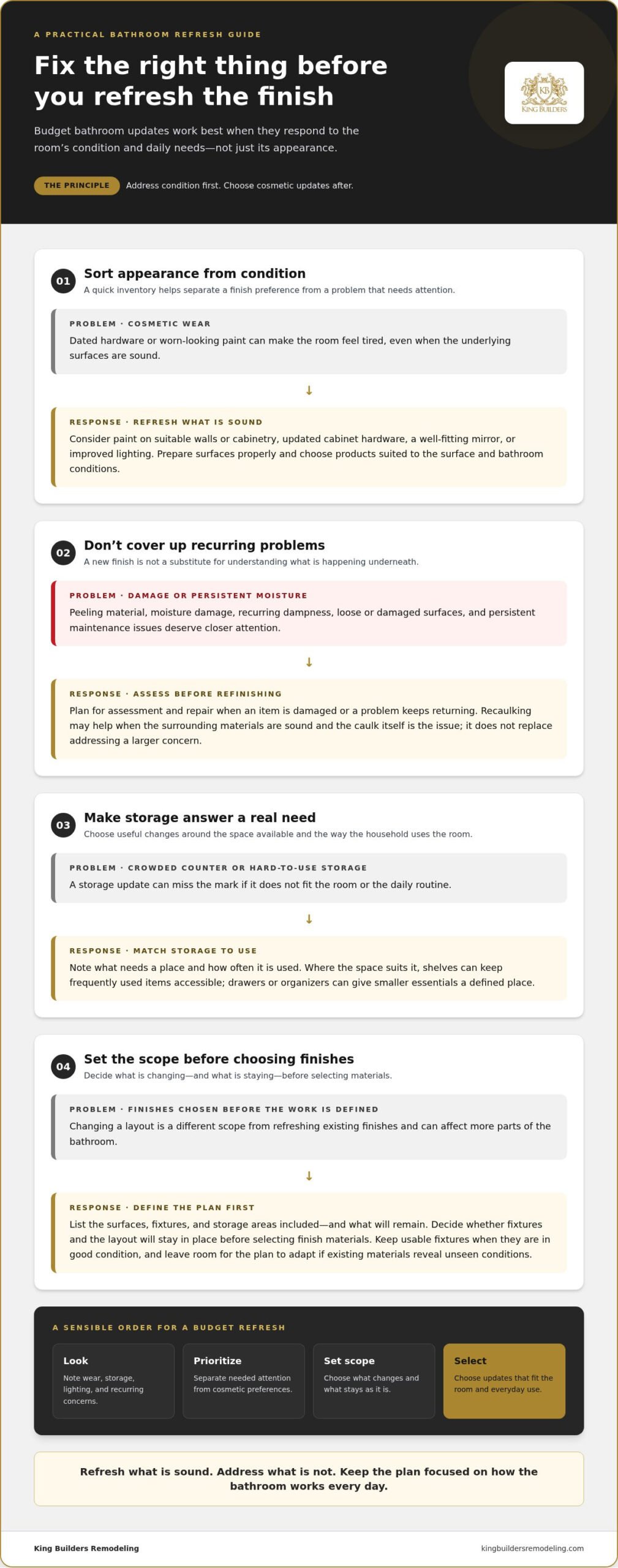
A clear sequence keeps choices connected and helps prevent finish selections from getting ahead of the work. Before buying materials, decide what the bathroom needs, what will stay, and what the project is meant to accomplish. This makes bathroom remodel ideas on a budget easier to compare and gives each decision a practical place in the plan.
Start with the condition of the room, then separate necessary work from improvements that are mainly about appearance. If a repair could affect a surface you’re planning to update, resolve the repair question before choosing paint, hardware, or other finishes. This order can help prevent redoing a cosmetic update after the project scope changes.
A practical sequence for a smaller bathroom refresh
Use this order to turn a collection of ideas into a workable scope:
- Assess the room: Note the condition of visible surfaces and fixtures, along with any issues that need attention before cosmetic work.
- Prioritize changes: Separate improvements that support daily use from optional appearance updates. For example, clearer lighting may matter more than a decorative accent if the vanity area is difficult to use.
- Define the scope: List the surfaces, fixtures, and storage areas included. Group related work, such as painting and hardware updates, so it’s easier to see how the pieces fit together.
- Decide what stays: Confirm whether the existing fixtures and layout will remain. This decision can affect which materials make sense and whether the project is a surface refresh or a broader renovation.
- Select finishes and plan the work: Choose materials that suit the surfaces and the bathroom’s everyday use, then organize the work around the agreed scope.
For instance, if the vanity and fixtures are staying, choose finishes that complement them rather than planning around replacements you may not need. If those elements are part of the change, settle that scope first so surface choices work with the updated room. Keep a written list of what is included, too. It can help you compare options without losing sight of the original priorities.
Massachusetts planning considerations
For homeowners in Saugus, Andover, Peabody, Lynn, Lynnfield, Malden, and Revere, local requirements are part of responsible project planning. Permit, inspection, zoning, and code requirements can depend on the work involved and the municipality. A surface refresh may have different considerations from work that changes fixtures, layout, or other parts of the room, so avoid assuming one rule applies to every bathroom project.
Before work begins, confirm applicable project requirements with the local building department. This is a useful step if the scope includes changes beyond finishes or if you’re unsure how the planned work is treated locally. Keeping the scope clear also makes it easier to understand which questions apply to the project, rather than planning around assumptions.
A well-ordered plan leaves room to adjust if assessment reveals a condition that changes the work. It also helps keep decisions tied to your priorities, instead of adding upgrades simply because they look attractive on their own. For homeowners whose plans extend beyond a refresh, residential bathroom remodeling can bring related improvements together in a considered scope.
Turn Your Bathroom Remodel Ideas Into a Thoughtful Home Improvement Plan
Good ideas become a useful plan when they match the bathroom’s condition, your household’s priorities, and the work the room actually needs. A focused refresh may be enough when the existing space functions well. If several improvements affect different parts of the room, organizing them as one considered project can help you understand the scope before choosing finishes or starting work.
When a focused refresh grows into bathroom remodeling
One update can lead naturally to another. Replacing a vanity, for example, may affect nearby surfaces, storage, or lighting. If your plans include several connected changes, coordinating them as a broader renovation can help keep decisions aligned. King Builders Remodeling provides residential bathroom remodeling for homeowners planning work beyond a simple surface refresh.
For a closer look at what broader planning can involve, explore this guide to bathroom remodeling. The right scope depends on the room and your goals, not on how many ideas you’ve saved. A useful plan identifies what matters most, what can remain, and which changes belong together.
Prepare to discuss your bathroom project
A project conversation is more productive when you can explain what isn’t working and what you hope to improve. You don’t need a finished design. Bring a few clear reference points so the discussion can focus on your priorities, the room’s present condition, and the possible scope of work.
Consider preparing:
- A short list of essential changes and optional improvements.
- Photos of the room, including areas that need attention.
- Notes about daily routines, storage needs, and frustrating features.
- A clear idea of which fixtures or finishes you hope to keep.
These details can help clarify which updates fit together and whether the project is a contained refresh or a larger renovation. They also give you a practical basis for discussing materials and next steps without assuming a price or timeline before the scope is understood. King Builders Remodeling is a family-owned Massachusetts contractor with more than 10 years in business, bringing a considered approach to residential remodeling and home improvement.
With bathroom remodel ideas on a budget, a clear scope helps keep inspiration grounded in what your home needs. Start with the improvements that support everyday use, then shape the rest of the plan around the room’s condition and the changes you value most.
Take the First Step Toward a Bathroom That Works for You
Your next step doesn’t have to be a long list of upgrades. Choose the change that would make the biggest difference to your daily routine, then consider how it fits the bathroom’s condition and the scope you have in mind. This keeps bathroom remodel ideas on a budget connected to real needs, while leaving room to adjust the plan as you learn more about the space.
If a few updates seem closely connected, bring them together in one project conversation rather than treating each as an isolated choice. A clear starting point helps you explain what you want to improve and consider a practical path forward. King Builders Remodeling works with homeowners on residential bathroom remodeling and broader home improvement, with the project shaped around the goals you bring to the discussion.
A thoughtful refresh can begin with one well-chosen improvement. With a clear goal and a plan that respects your home, you can move toward a bathroom that feels more comfortable, useful, and truly your own. To discuss bathroom remodeling or a broader home improvement project in Saugus, Andover, Peabody, Lynn, Lynnfield, Malden, or Revere, contact King Builders Remodeling.
Frequently Asked Questions
Can I remodel a bathroom on a budget without replacing everything?
Yes. You can keep fixtures that remain useful and focus the project on selected improvements. For bathroom remodel ideas on a budget, consider keeping a vanity that provides enough storage or a shower that functions well, then update the finishes around them. Keeping existing elements can also preserve the room’s familiar arrangement. If you notice a concern beneath or around a fixture, address it before deciding what to retain.
What bathroom updates make the biggest visual difference on a budget?
Coordinating a few prominent details can have more impact than choosing upgrades one at a time. For example, a mirror, cabinet pulls, and light fixture that complement one another can give the vanity area a more unified look. Step back and notice what draws your eye first when entering the room. That can help you focus on the most visible area instead of spreading changes across details that don’t work together.
Can I paint bathroom walls or cabinets as part of a budget remodel?
Yes, painting can refresh suitable walls or cabinetry if the surface is in sound condition and prepared for the finish. Before starting, check for peeling, soft spots, or signs that the material is deteriorating. Consider how moisture reaches the surface and whether the required preparation is within your skill level. Paint changes appearance, but it won’t correct damage or explain why a surface keeps breaking down.
Is it better to update a bathroom vanity or keep the existing one?
Keep the vanity if its structure is sound and it works for your household’s storage and countertop needs. You might improve its appearance by changing the hardware or coordinating the mirror and surrounding finishes. Replacement may make more sense if drawers or doors no longer function, the unit doesn’t fit your routine, or its condition affects the wider plan. Compare what each option solves before expanding the project.
Can I remodel a bathroom in stages to manage my budget?
Yes, some projects can be divided into stages, particularly when the updates are independent. Replacing a mirror, for example, may not depend on a later storage change, while work on adjoining surfaces may be easier to coordinate together. Before splitting the project, consider whether separate rounds could repeat setup or leave an unfinished transition between areas. Decide which improvements should happen first based on room condition and daily use.
Do I need a permit for a budget bathroom remodel in Massachusetts?
Whether a permit or inspection applies depends on the planned work and the municipality, not simply on the project’s budget. A cosmetic change may be treated differently from work that alters fixtures or other parts of the room. Homeowners in Saugus, Andover, Peabody, Lynn, Lynnfield, Malden, and Revere should confirm applicable requirements with their local building department before starting, since guidance can vary between communities and projects.